7-Day Southern Italy Itinerary: Amalfi Coast, Puglia and Naples
A 7-day southern Italy itinerary — the Amalfi Coast, Capri and the Path of the Gods, then Matera, Alberobello and Polignano in Puglia, finishing in Naples and Pompeii. Including why Puglia is the better value.
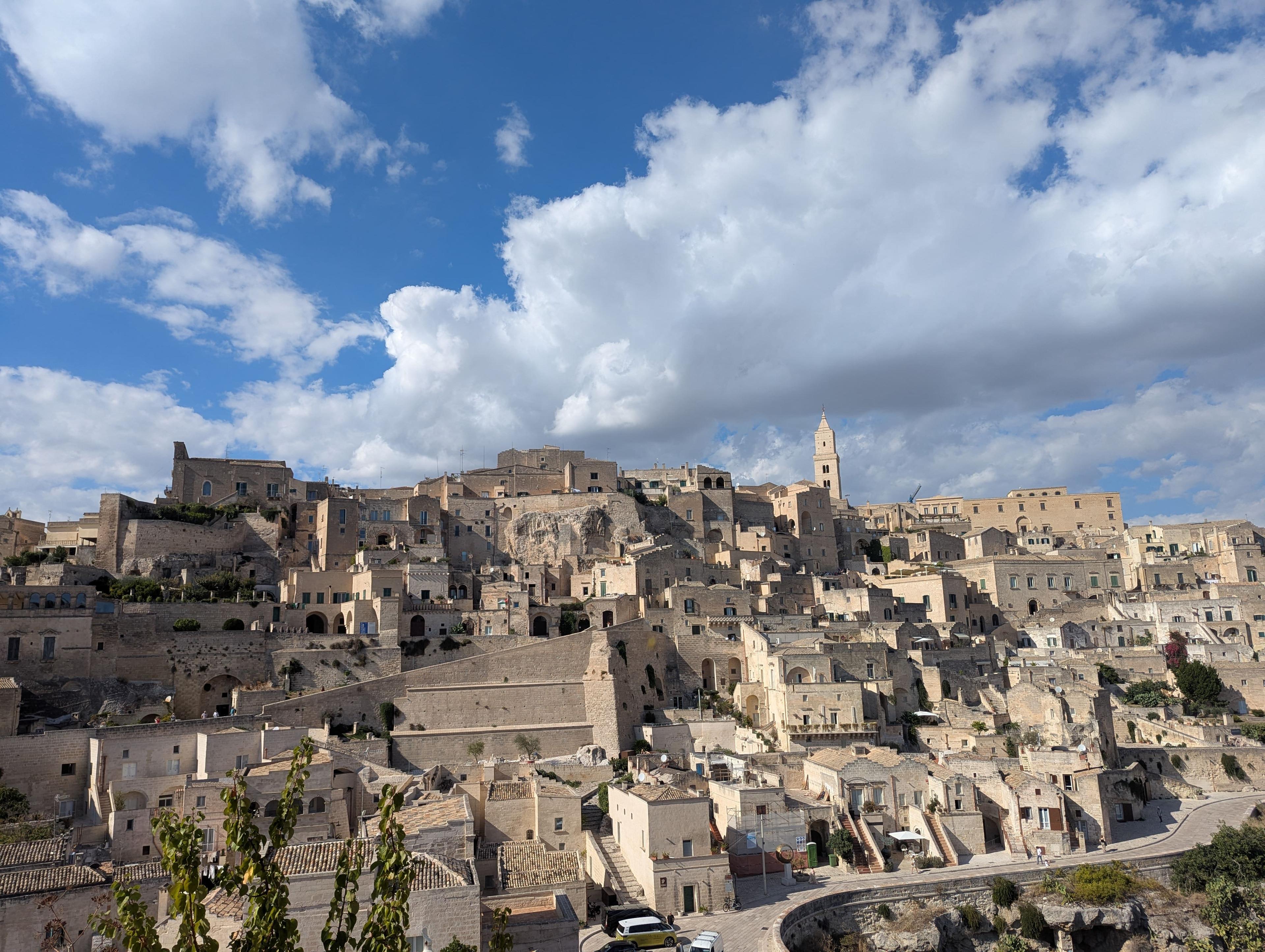
This route covers three quite different parts of southern Italy in a week: the cliffside towns of the Amalfi Coast, the caves and trulli of Puglia, and Naples with Pompeii.
Here's the verdict I'd lead with, having done all three:
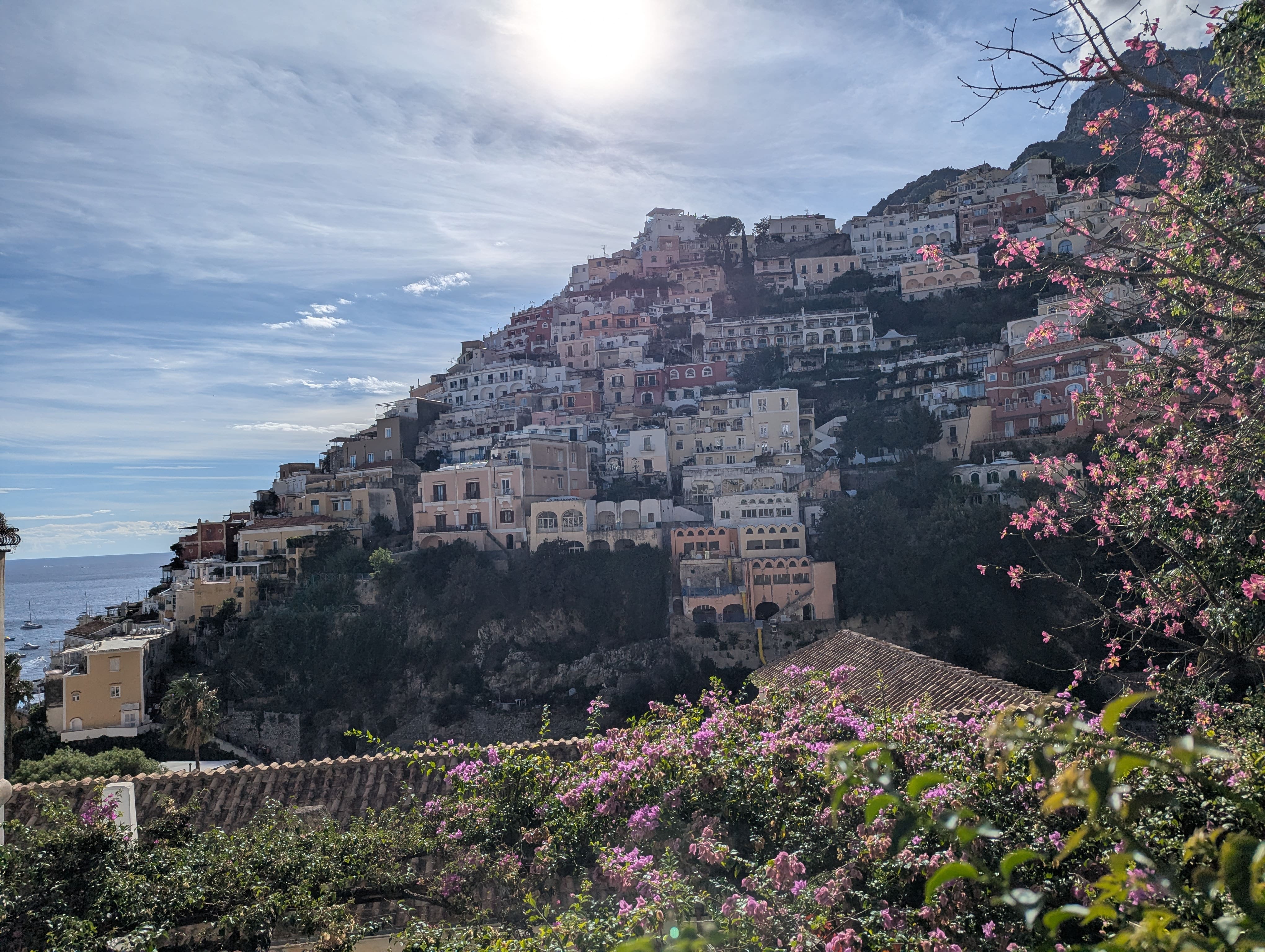
The Amalfi Coast looks incredible, but it is very expensive. Puglia isn't as spectacular — there's nothing there to match those stacked coloured houses — but it's far better value for money.
Most people doing a week in southern Italy spend all of it on the Amalfi Coast. I'd argue splitting your time is the better trip, and the rest of this is how I'd do it.
If you're heading north instead, I've written a separate 11-day itinerary through Rome, Florence and Venice, a 2-day Rome guide and a 7-day Dolomites itinerary.
Practical notes before you start
You don't need to book much in advance. I booked essentially nothing and it was fine. Ferries and regional trains were cheap and reliable throughout, and turning up on the day never caused me a problem. This is a refreshing contrast to Rome, where the Colosseum and Vatican need booking 1.5 months out.
Base yourself in Sorrento for the Amalfi section. This worked well — Capri is an easy day trip from there, and both Positano and Amalfi are straightforward to reach.
Go in shoulder season, and still expect heat. I went in October and it was still too hot on the exposed hiking. Worth knowing before you plan a midday walk.
Day 1: Sorrento and Positano
Fly into Naples and take the Circumvesuviana train to Sorrento — about an hour.
Spend the first afternoon in Sorrento itself: Piazza Tasso and the views from the Villa Comunale are enough to fill the time while you adjust.
Then take the ferry to Positano (about 30 minutes). Do this by boat rather than road — the approach from the water is how Positano is meant to be seen, with the whole town stacked up the cliff in front of you.
Positano is genuinely overcrowded, and I won't pretend otherwise. But it still looks amazing despite the crowds, which is not something I'd say about every over-touristed place. Walk the narrow streets down to Spiaggia Grande.
Day 2: The Path of the Gods and Amalfi
The Path of the Gods
Take a bus from Sorrento to Amalfi and another up to Bomerano, where the trail starts.
It's not as hard as its reputation suggests. The walk from Bomerano to Nocelle took me roughly three hours, and the trail itself is manageable for anyone reasonably fit.
The real difficulty isn't the terrain, it's the exposure:
Check the weather and start early. It was too hot when I did it, and that was in October. There's very little shade along the route and the heat is the thing that will actually ruin the walk for you.
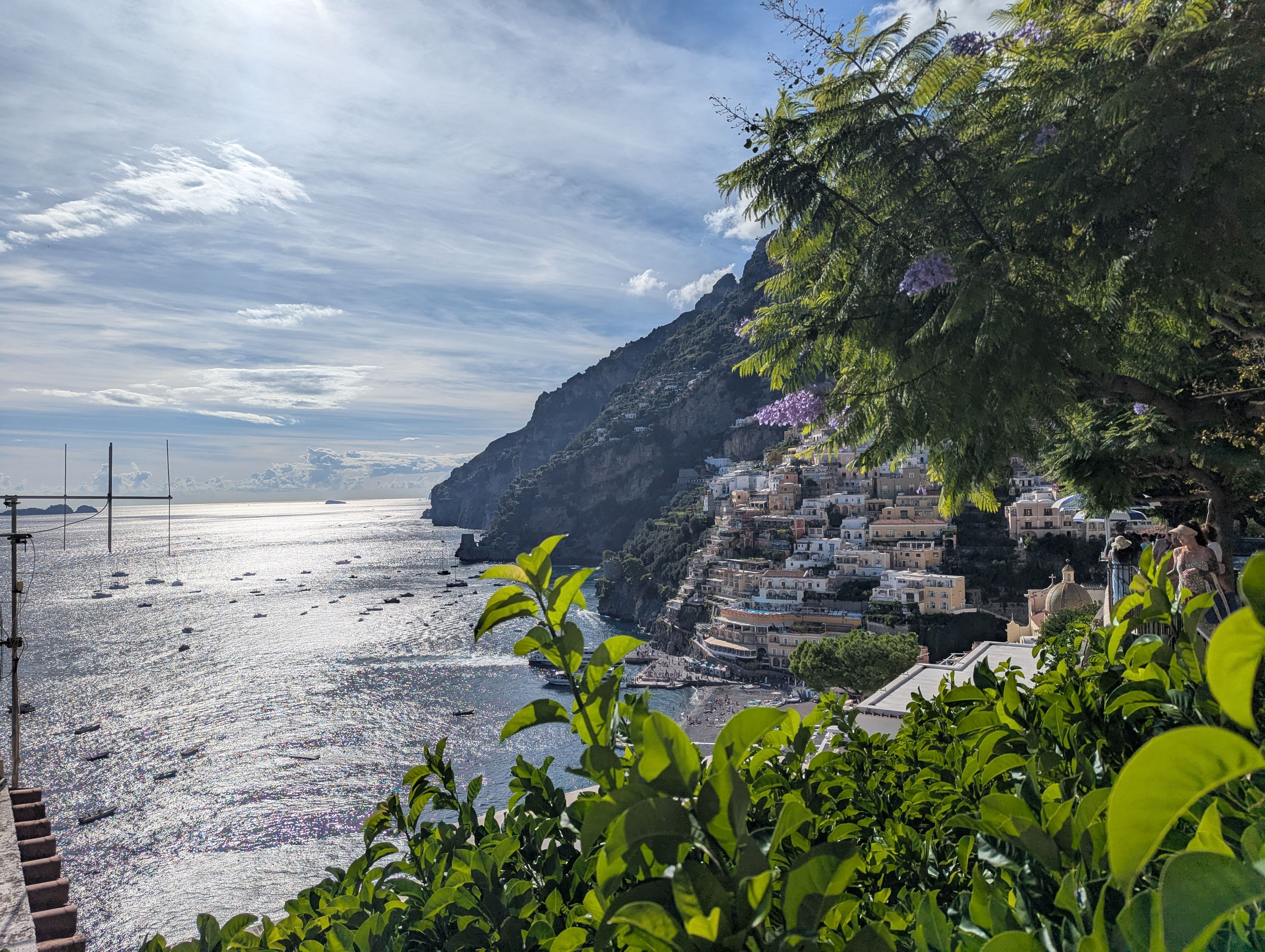
The views along the coastline — and out to Capri — are the best on this trip.
Amalfi
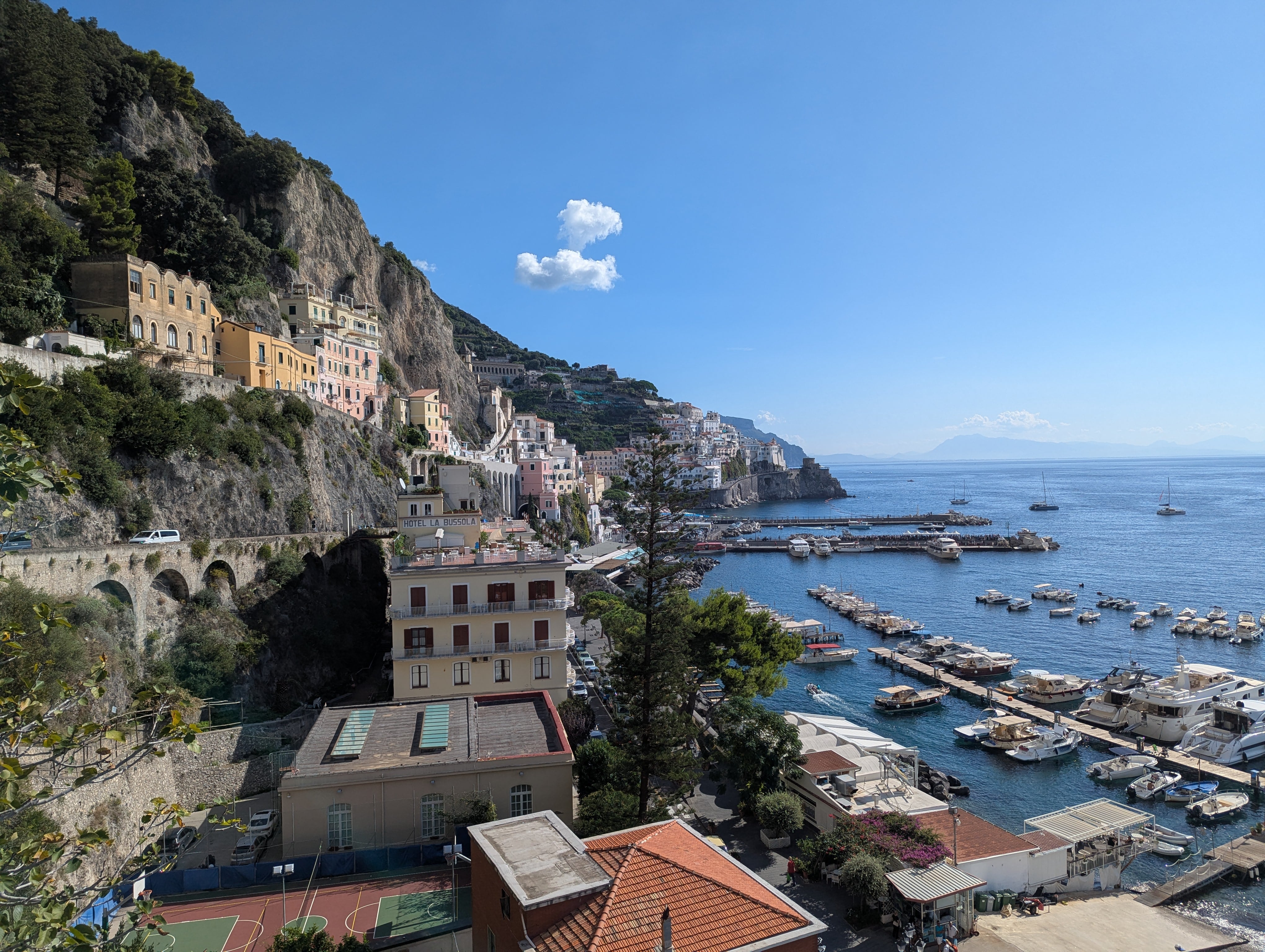
From Nocelle, descend to Positano and take the ferry to Amalfi. The Duomo di Sant'Andrea is the centrepiece, and the paper museum is a decent way to spend an hour.
Day 3: Capri, then the long haul to Puglia
Fair warning: this is a brutal day. Capri in the morning, then a four-hour train across the country to Bari. It's doable — I did it — but it's not for the faint-hearted, and if you'd rather not spend an evening on a train after a full day on an island, split it across two days.
Capri
Take an early ferry from Sorrento (20–30 minutes).
Skip the Blue Grotto. It's the thing everyone photographs and, in my opinion, it isn't worth it — you queue, you're rushed through on a small boat, and it's over.
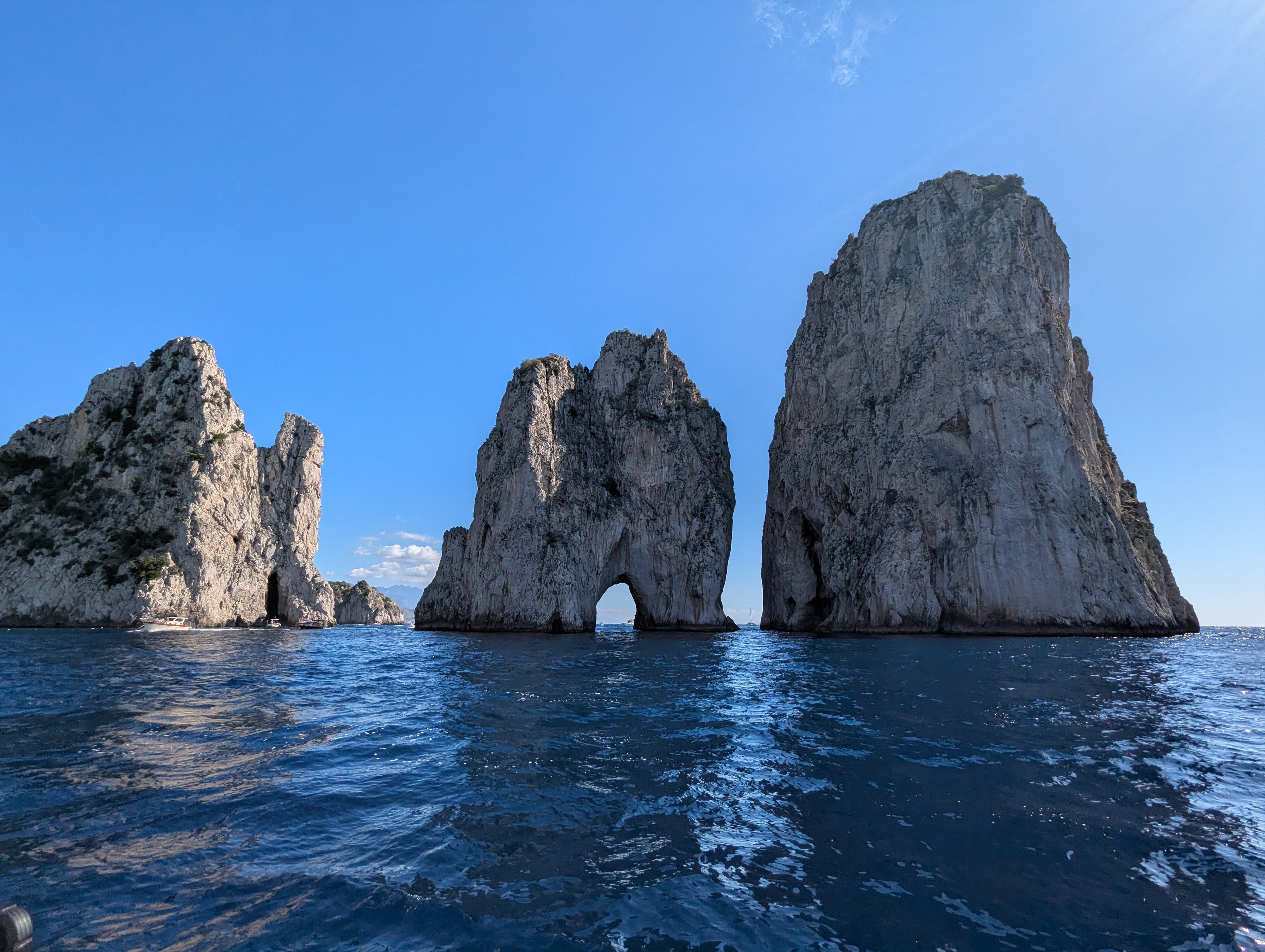
What is worth it is the chairlift up Monte Solaro from Anacapri, which gives you a 360-degree view over the whole island and the coastline you walked the day before. The Gardens of Augustus and the Faraglioni rocks are also worth your time.
On to Bari
Ferry back to Naples, then the high-speed train to Bari — about four hours.
Bari Vecchia, the old town, is a maze of streets with real daily life happening in it rather than a preserved showpiece. It's also where you'll notice the price difference from the Amalfi Coast immediately.
Day 4: Matera and Alberobello
This is the day that justifies coming to Puglia at all, and it's the most unusual day of the week.
Matera
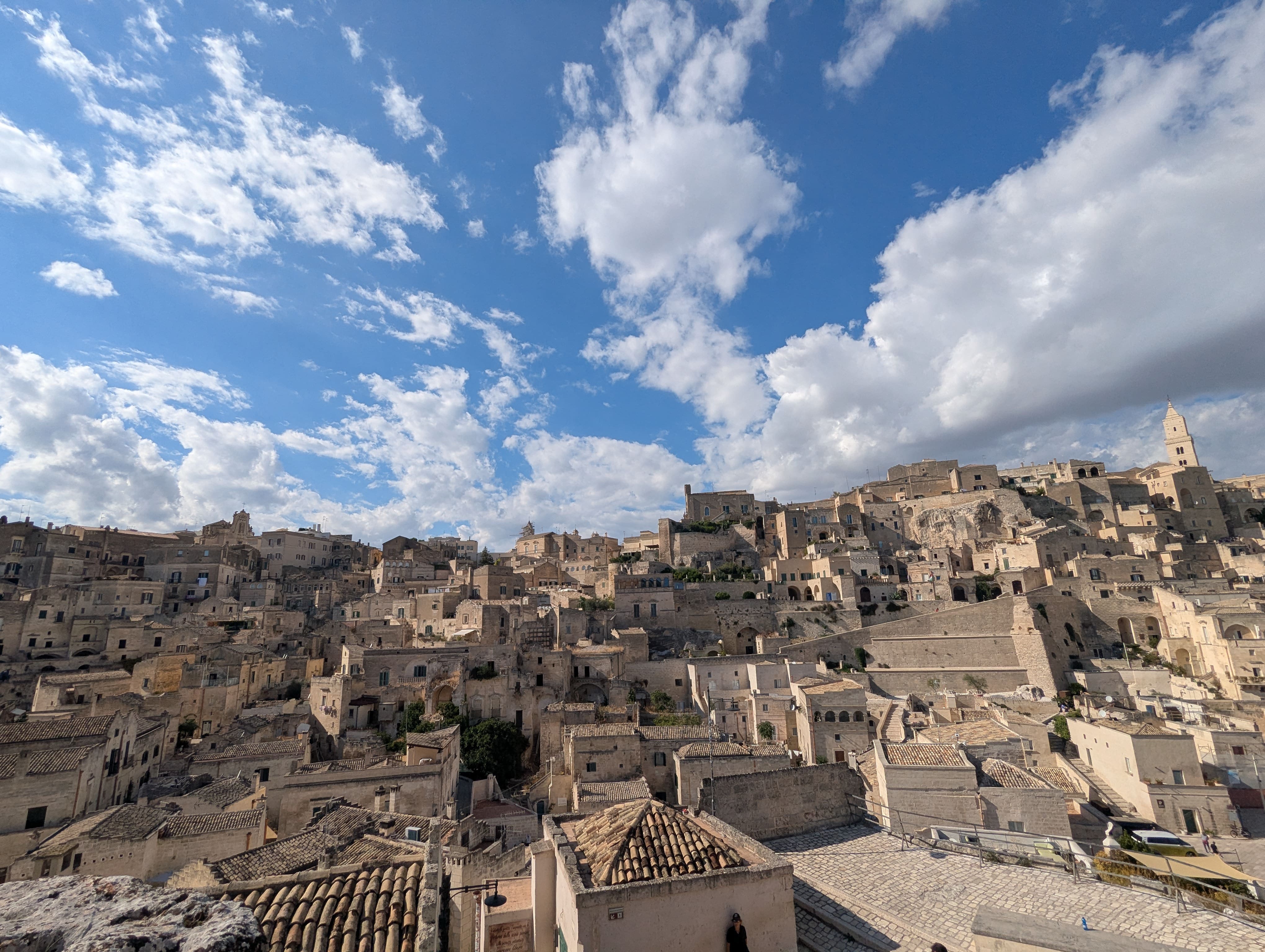
An hour and a half from Bari. The Sassi di Matera are cave dwellings carved into the rock, continuously inhabited for thousands of years and now a UNESCO site. The Casa Grotta di Vico Solitario shows you how families actually lived in them, which turns the view from a photograph into something more uncomfortable and more interesting.
There is nowhere else in Italy that looks like this.
Alberobello
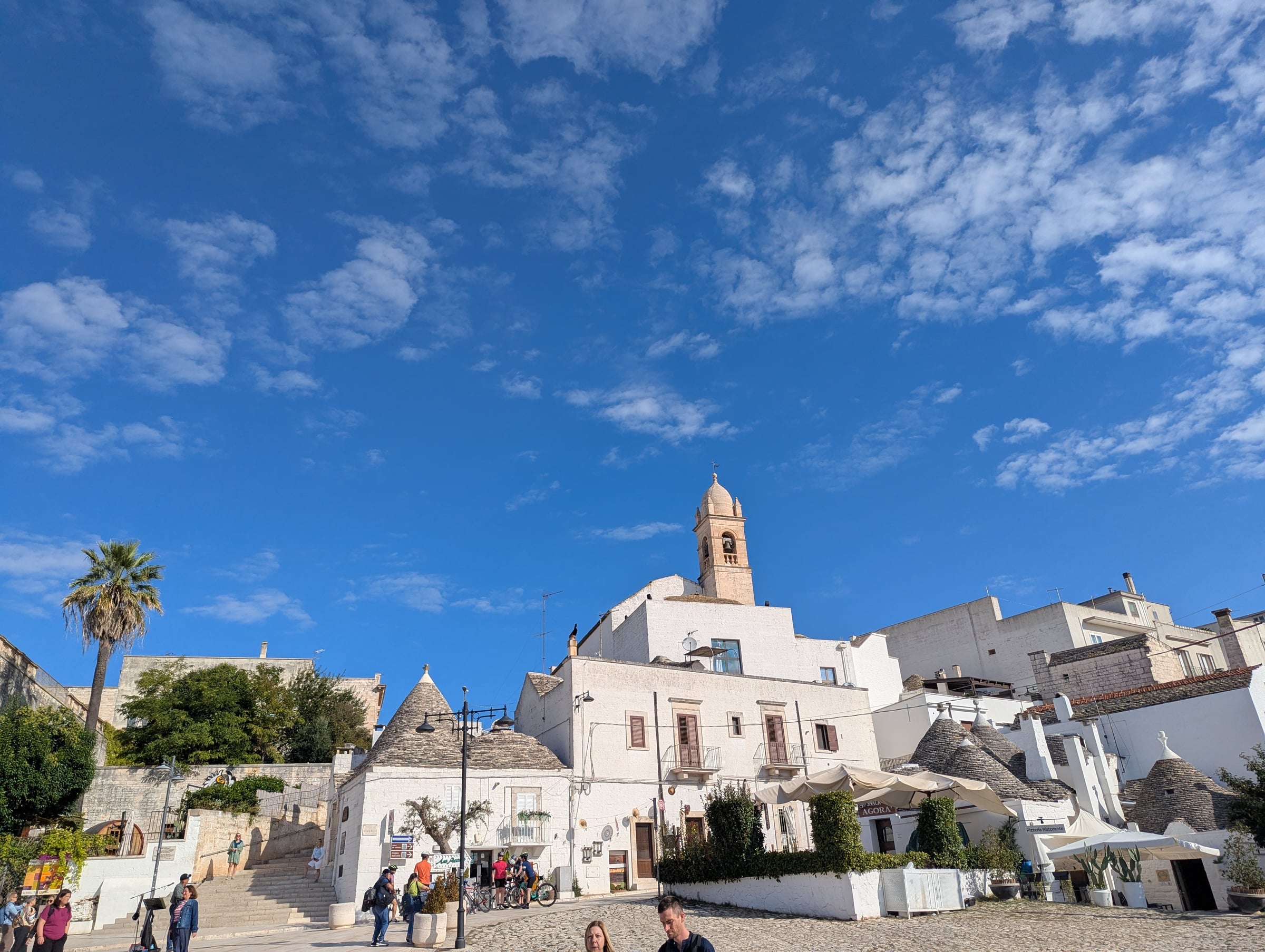
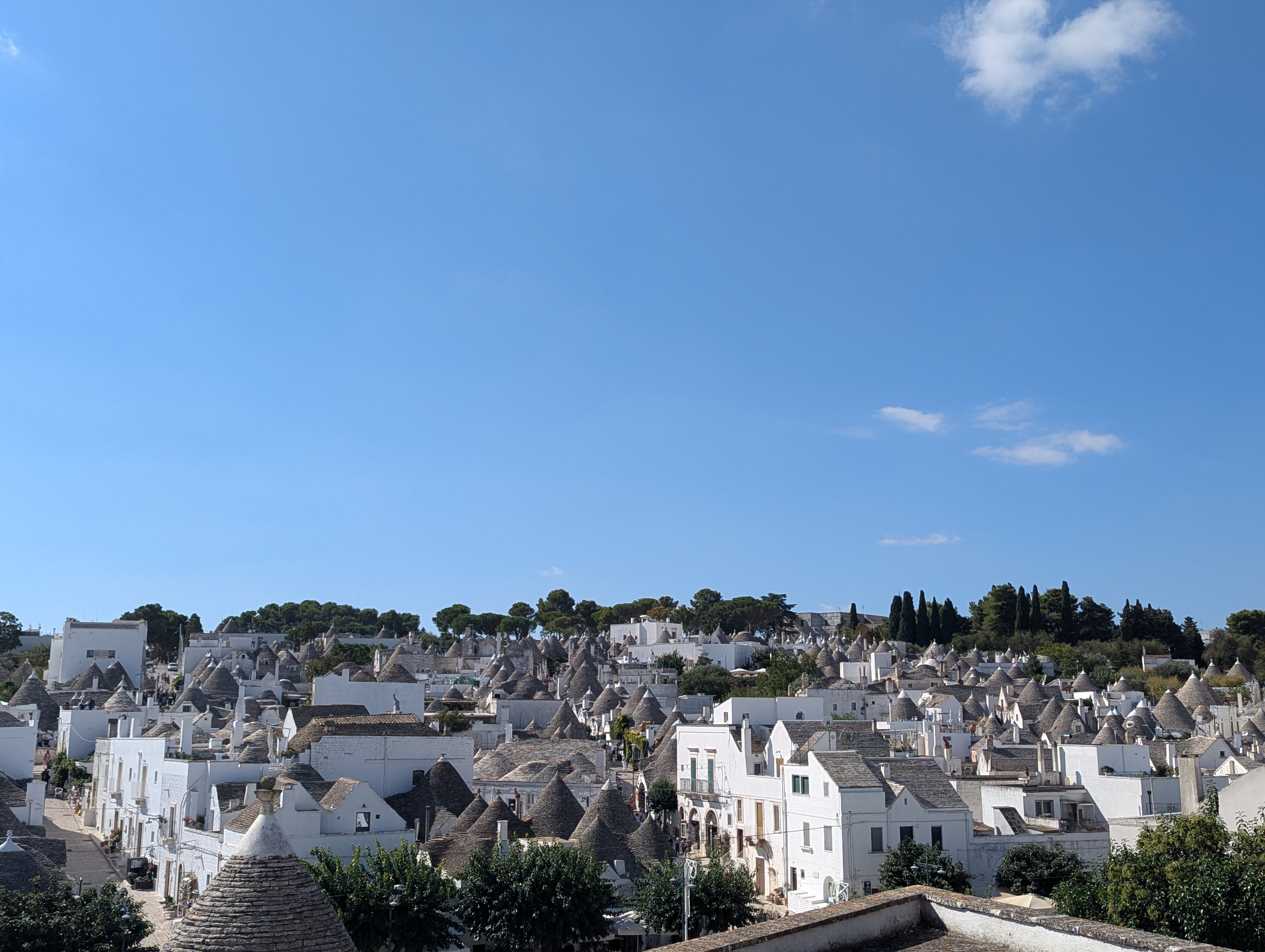
An hour on from Matera, and completely different again: hundreds of trulli, whitewashed houses with conical stone roofs, packed into the Rione Monti and Aia Piccola districts.
It is touristy, and the main streets are lined with souvenir shops. Walk into the quieter district and it settles down considerably.
Day 5: Polignano a Mare, then Naples
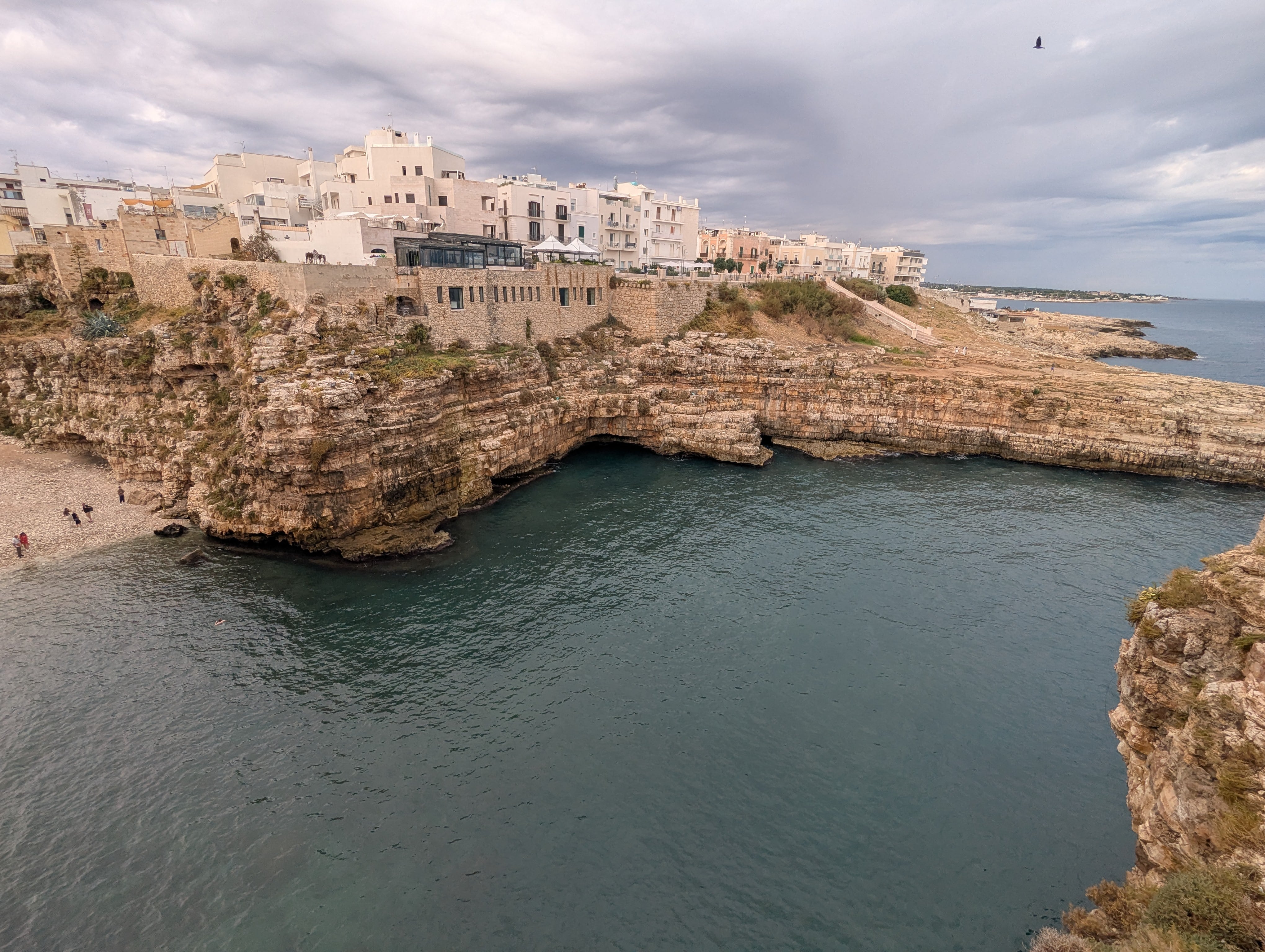
Polignano a Mare is 30 minutes by train from Bari, and it's the best of the Puglian coast — an old town perched on limestone cliffs above Lama Monachile, a cove beach wedged between the rock walls.
This is the comparison that sums up the trip: it isn't as immediately dramatic as Positano, but you can actually afford to eat there.
Then the high-speed train back across to Naples, about four hours.
Day 6: Naples
Naples is chaotic, and it has an energy I haven't found in any other city. That's the honest summary. It is loud, crowded and slightly overwhelming, and it's also the most alive place on this itinerary.
On the reputation: pickpockets are everywhere in Italy, and I didn't find Naples noticeably worse than anywhere else. I had more trouble around the Colosseum in Rome than I did here. Take the usual precautions and don't let the city's reputation put you off.
Worth your day:
- Spaccanapoli — the straight, narrow street cutting through the historic centre
- Napoli Sotterranea — the underground city beneath the streets
- National Archaeological Museum — this holds the actual finds from Pompeii, so it pairs well with tomorrow
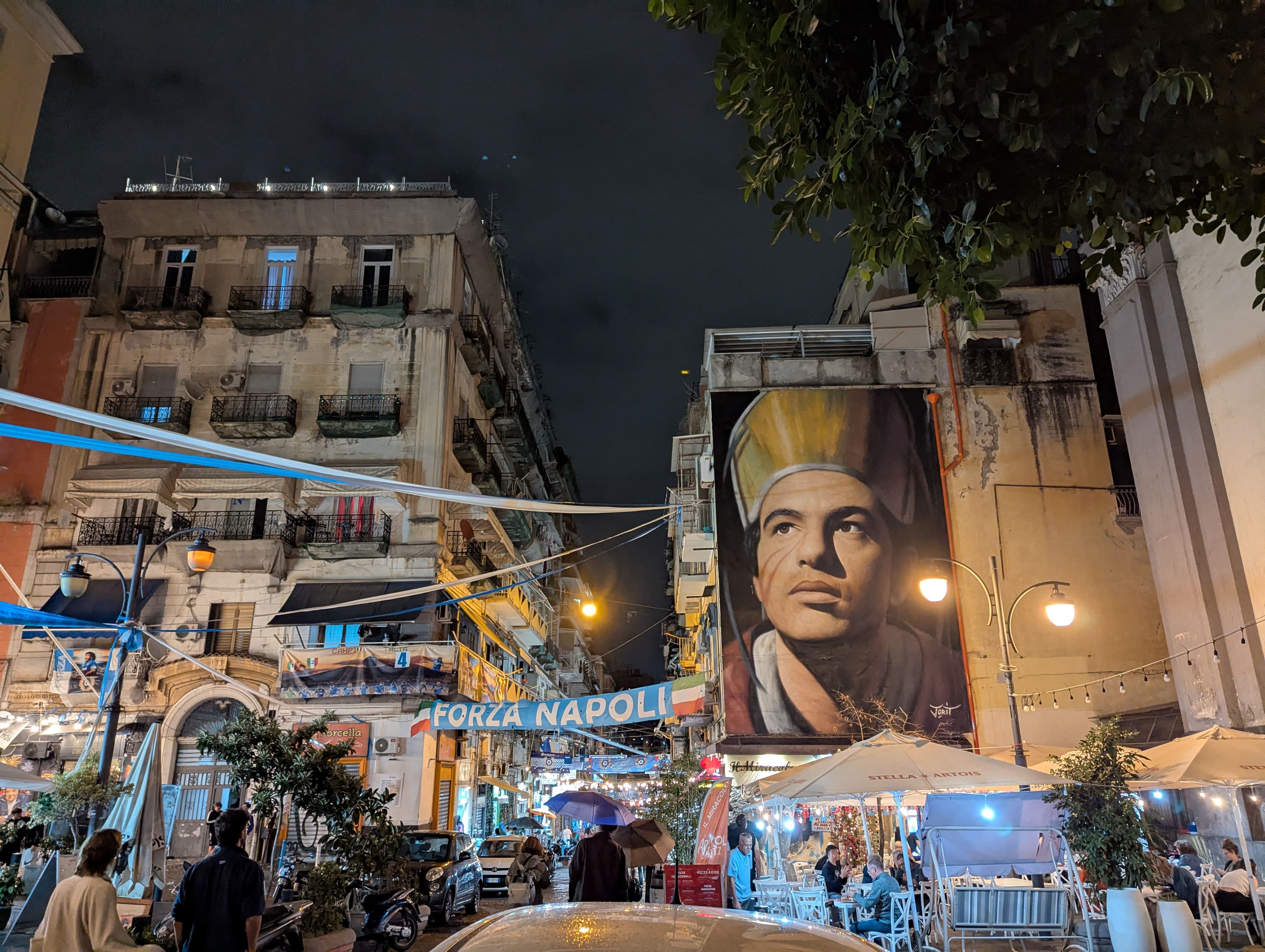
On pizza: every famous pizzeria in Naples is good. I don't have one to single out, and I'd be suspicious of anyone who insists there's only one correct answer. Pick one, queue, eat.
Day 7: Pompeii
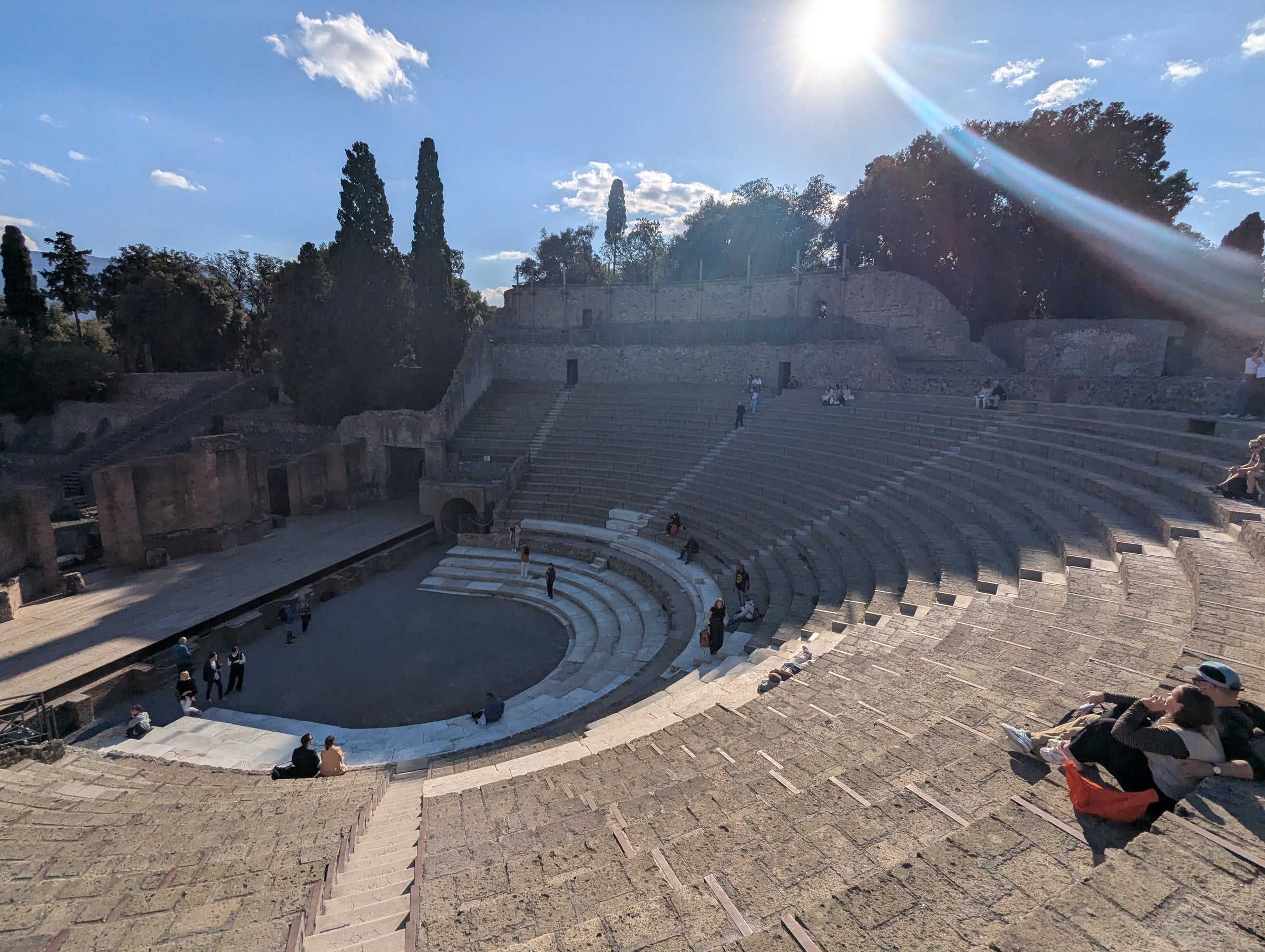
The Circumvesuviana train runs from Naples to Pompeii Scavi in about 30 minutes.
Give it several hours. Having seen the museum in Naples the day before makes a real difference here — you've already seen the frescoes and objects that came out of these houses, so the empty rooms fill themselves in.
Then back to Naples for the airport.
What I'd tell you honestly
Don't eat on the Amalfi Coast if you can avoid it. Everything is expensive, and you're paying for the view rather than the food. Eat in Sorrento, eat in Puglia, eat in Naples — all three are better value and, in Naples' case, better food.
Puglia is the better value half of this trip. The Amalfi Coast is more beautiful; there's no argument there. But Puglia gave me more for the money, and Matera is the single most unusual place I saw in Italy.
Skip the Blue Grotto. Spend the time and money on Monte Solaro instead.
Positano is worth it despite the crowds. That's rarer than it sounds.
October was a good call for weather and crowds, but it was still too hot for comfortable midday hiking.
Bringing a drone?
Capri and parts of the coast between Amalfi and Positano are flyable, but the towns themselves are not. I've written up where you can legally fly a drone in Italy, including what worked for me on the Path of the Gods.