2 Days in Rome: A First-Timer's Itinerary
A 2-day Rome itinerary covering the Colosseum, Roman Forum, Vatican and Trevi Fountain — how far ahead to book, what's skippable, and a warning about how pickpockets actually operate.
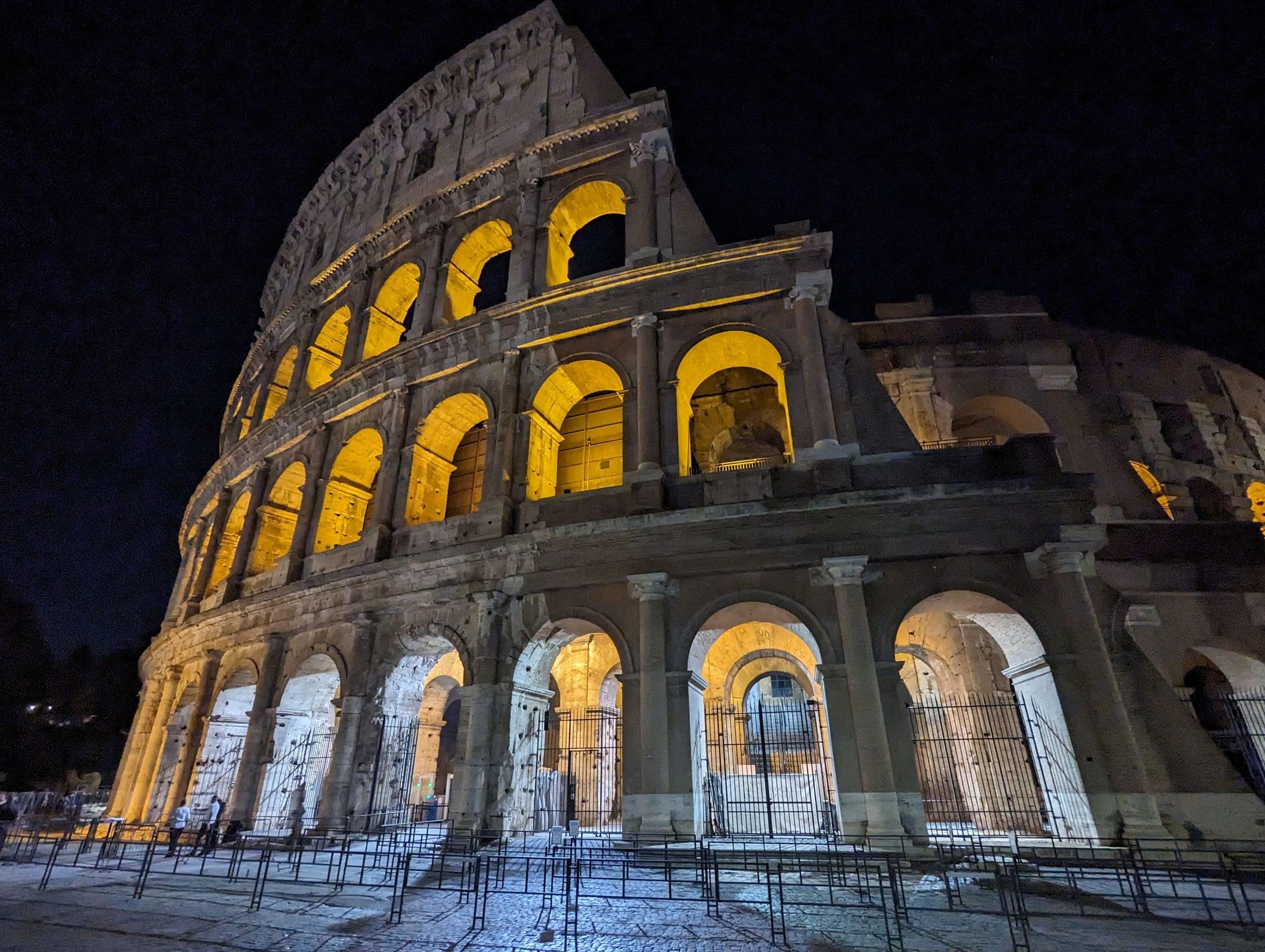
Two days is enough to see the essentials of Rome if you're willing to move at a decent pace. I did exactly that as the opening of my 11-day Italy itinerary, travelling solo and walking almost everywhere.
Here's how I'd structure it, plus the practical things I wish I'd known first.
Before you go: book earlier than you think
This is the one thing that will actually ruin your trip if you get it wrong.
Book the Colosseum and the Vatican Museums at least 1.5 months in advance. Not one month — one and a half. These two genuinely sell out, and turning up hoping for same-day entry to either is how people end up staring at the outside of them.
Almost everything else can be sorted much later, or on the day:
- The Pantheon — buy on the spot. The cash queue is usually shorter than the card one.
- St. Peter's Basilica — free entry, no booking, but expect a long queue.
- Borghese Gallery — needs booking, but see below on whether you want it at all.
A warning about pickpockets
I don't normally lead with this, but it's worth your attention: out of six people from my hostel, three lost their wallets and one lost her phone.
Mine happened in the queue for ice cream right next to the Colosseum — a busy, crowded spot where nobody's paying attention. The method was identical every time:
Someone shoves you into another person. In the second it takes you to react, apologise, or steady yourself, both of them are gone — and so is whatever was in your pocket.
It's not subtle and it's not sophisticated. It just relies on your instinct to be polite for a moment. Keep your phone and wallet in a front or zipped pocket around the Colosseum, Trevi Fountain, and anywhere a queue forms.
Day 1: Ancient Rome
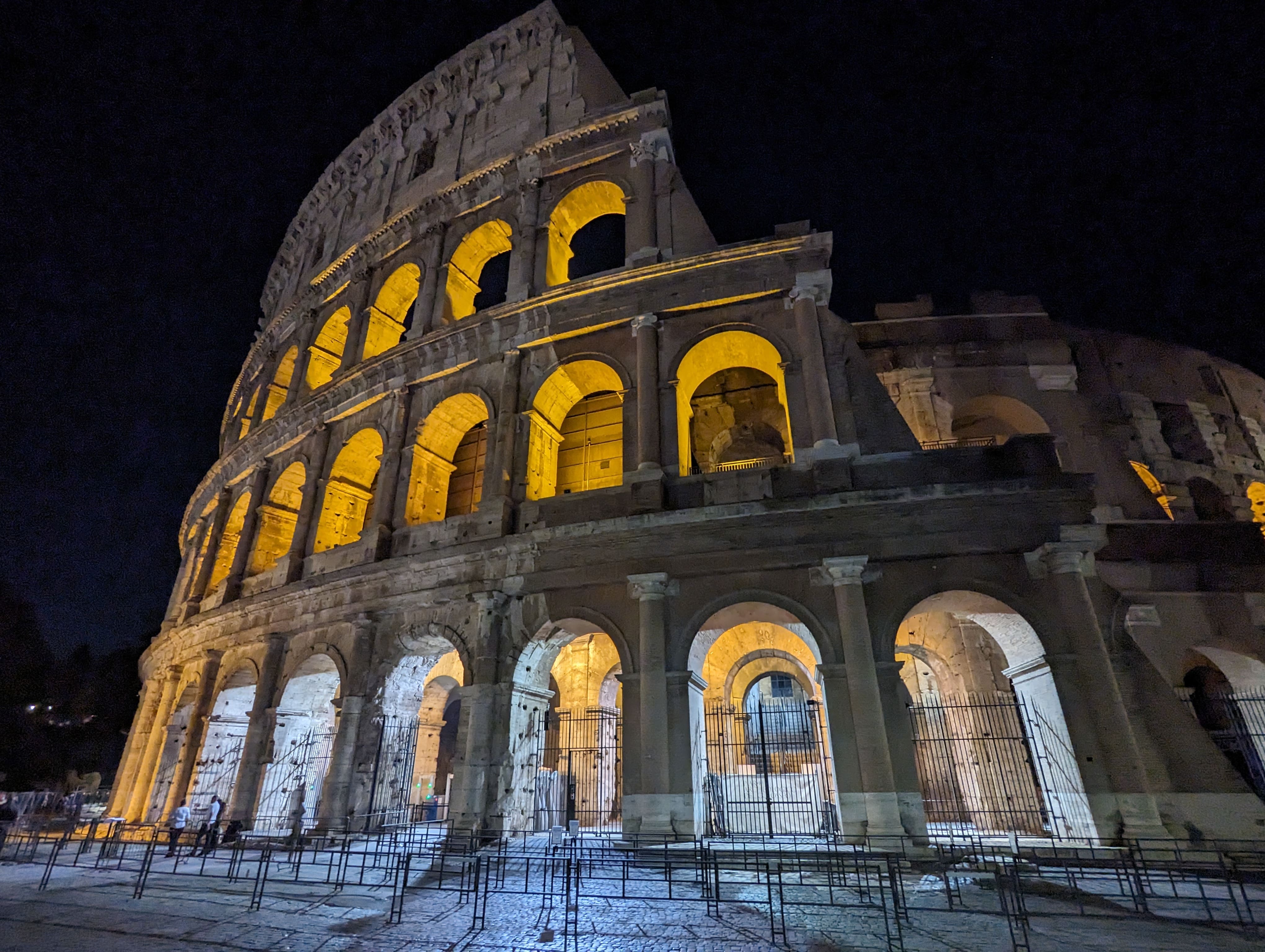
Colosseum
Standard entry without a guided tour is fine — I'd skip the guided tour and use the Rick Steves audio guide app instead, which is free and genuinely good.
Give it around 2 hours.
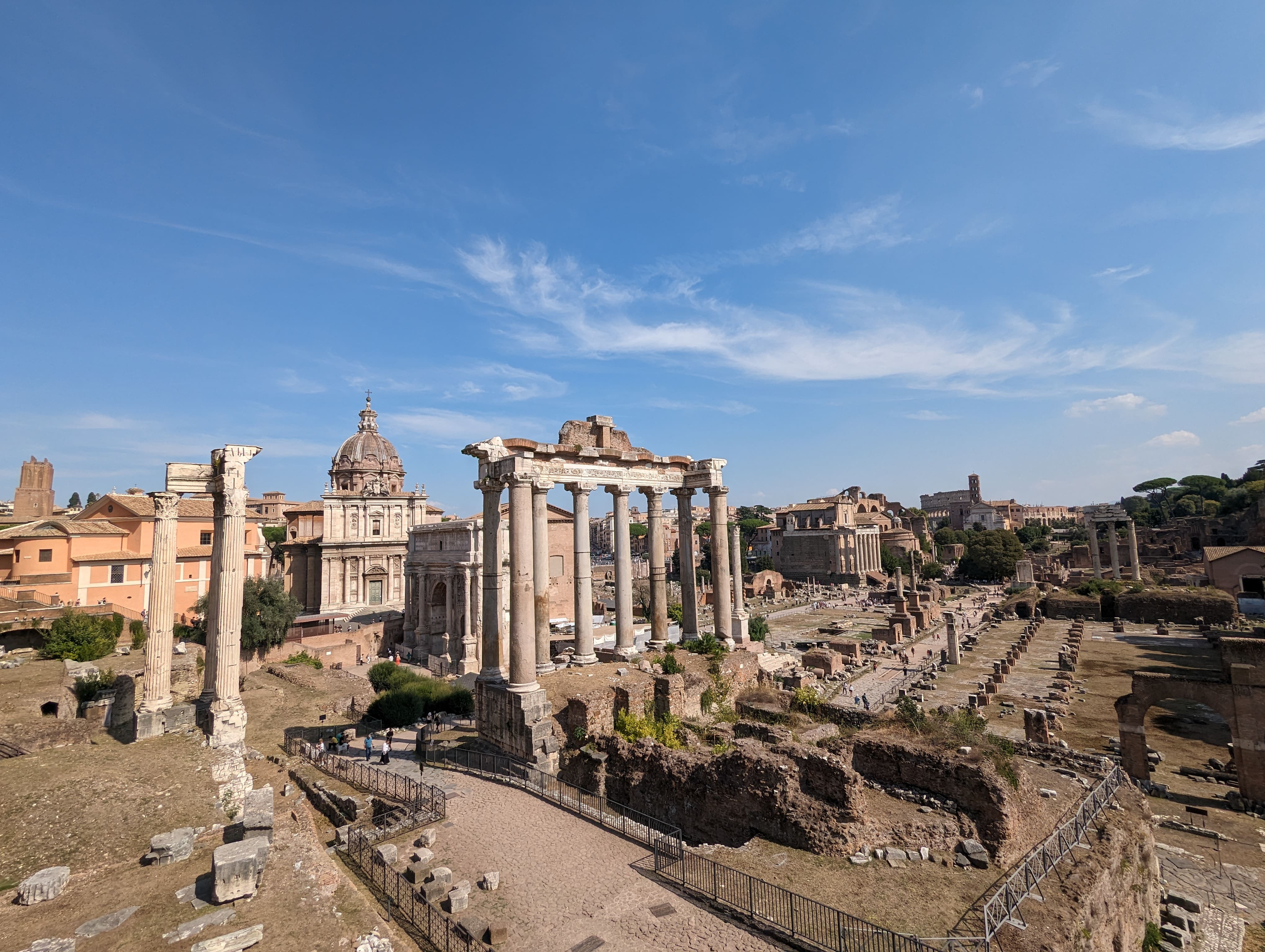
Roman Forum
Directly across the street, and covered by the same combined ticket as the Colosseum, so there's no reason not to do both on the same day.
This is the part that rewards an audio guide the most — without one it's a field of attractive rubble, and with one it's a city. Budget around 3 hours.
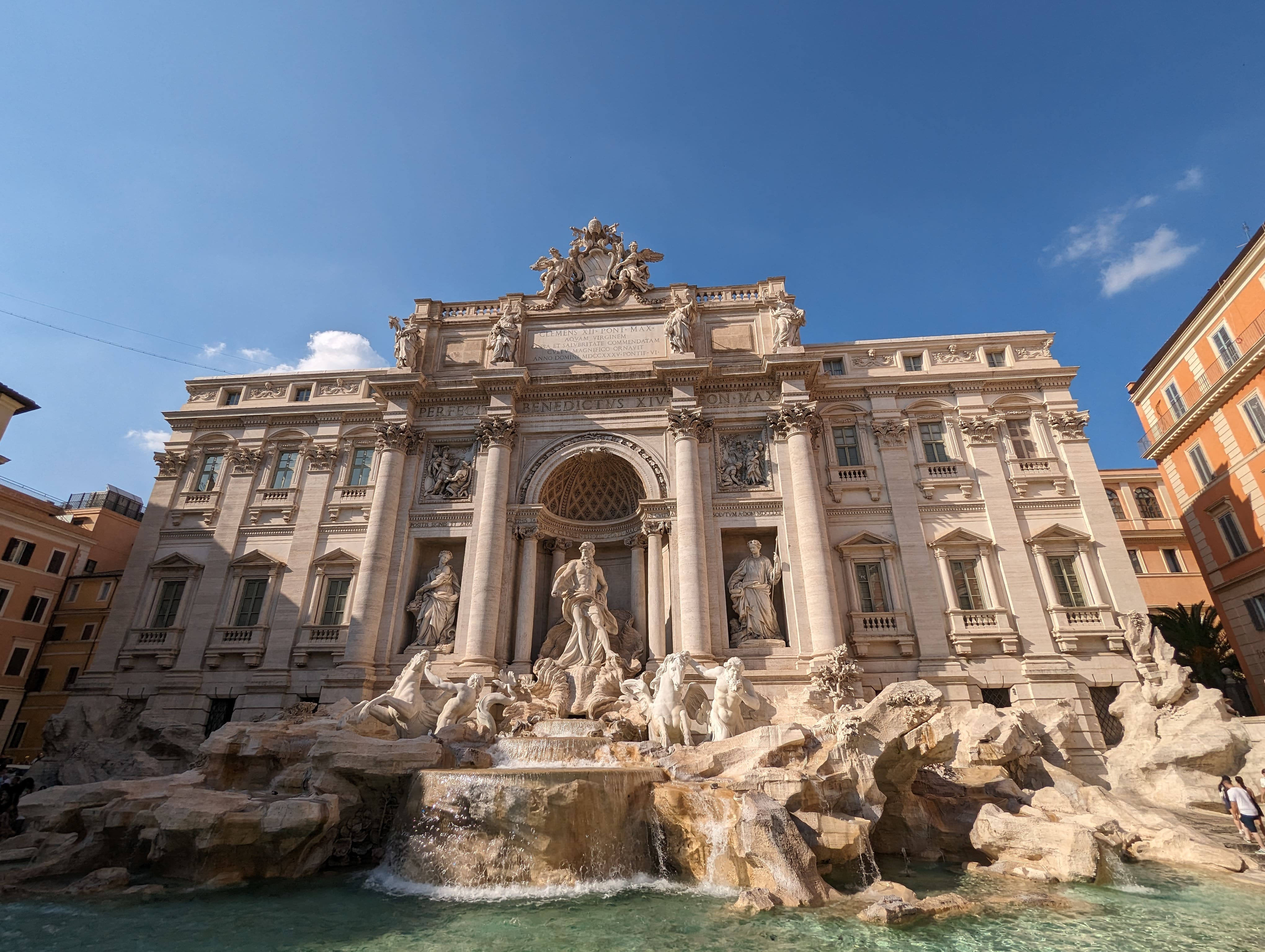
Trevi Fountain
Genuinely stunning Baroque work, and the water really is that blue.
Go early in the morning or late at night. In the middle of the day it's shoulder-to-shoulder and you'll spend the whole time protecting your pockets rather than looking at the fountain.
Pantheon
Originally a Roman temple, now a church, and worth reading a little about before you walk in — the engineering of the dome is the whole point, and it lands differently if you know what you're looking at.
Spanish Steps
Honestly? There isn't much to do here. It's a set of steps in a nice square surrounded by luxury shops. Worth a pass-through rather than a stop, though the street performers in the surrounding alleys are often excellent.
Day 2: Vatican City
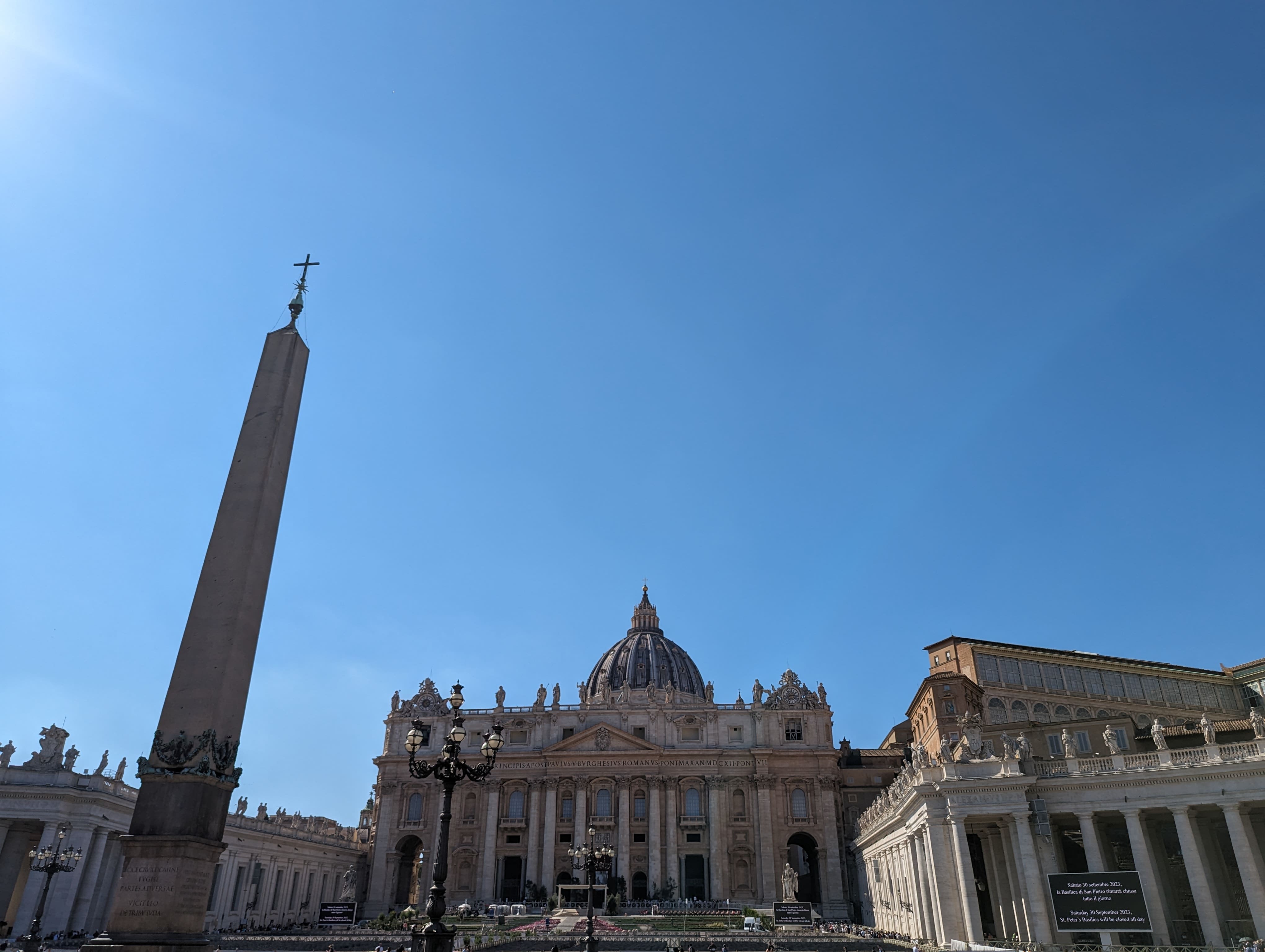
St. Peter's Basilica
One of the largest churches in the world, and entry is free — but the queue is long, so get there early.
The dome climb is a separate ticket and worth it for the view out over the square.
Vatican Museums and the Sistine Chapel
Book these together, well ahead (see above). Allow 3–4 hours — it's an enormous collection and rushing it is pointless.
Use an audio guide here too. And note that photos aren't allowed in the Sistine Chapel, which is enforced more strictly than you'd expect.
Borghese Gallery — skippable
Here's my honest take: if you're not particularly into art, skip the Borghese. It holds Bernini, Caravaggio and Raphael, and it's excellent if that means something to you. If it doesn't, it's a fair distance from everything else and you'll get more out of those two hours elsewhere in the city.
If you are into art, don't skip Florence — the Uffizi is the one that converted me.
Practical notes
Where to stay. I was travelling solo and stayed in a hostel near the train station, which worked well — central enough to walk most places and easy for onward trains.
Getting around. I walked almost everywhere because I was staying near the centre, and Rome rewards that. When you don't want to walk, the metro is quick and easy.
Eating. I'm not going to give you a list. Almost anywhere in Rome is good — that's genuinely the case, and it's one of the nicest things about the city.
When to go. I went in October and I'd argue it's the best month: the weather is mild, the summer crowds have thinned out, and flights are noticeably cheaper.
Is two days enough? It was for me, but I travel with a full itinerary and move fast. If you'd rather amble, take coffee breaks and sit in piazzas, give Rome four days.
Where to go next
Rome is the natural starting point for a longer Italian trip. From here I went north to Florence — see my Florence travel guide — and the full route is in my 11-day Italy itinerary.