Florence Travel Guide: What to See, Where to Eat and What to Skip
My favourite city in the world — a Florence guide covering the Duomo climb, why the Uffizi converted me to museums, the best pasta in the city, and how to visit the museums for free.
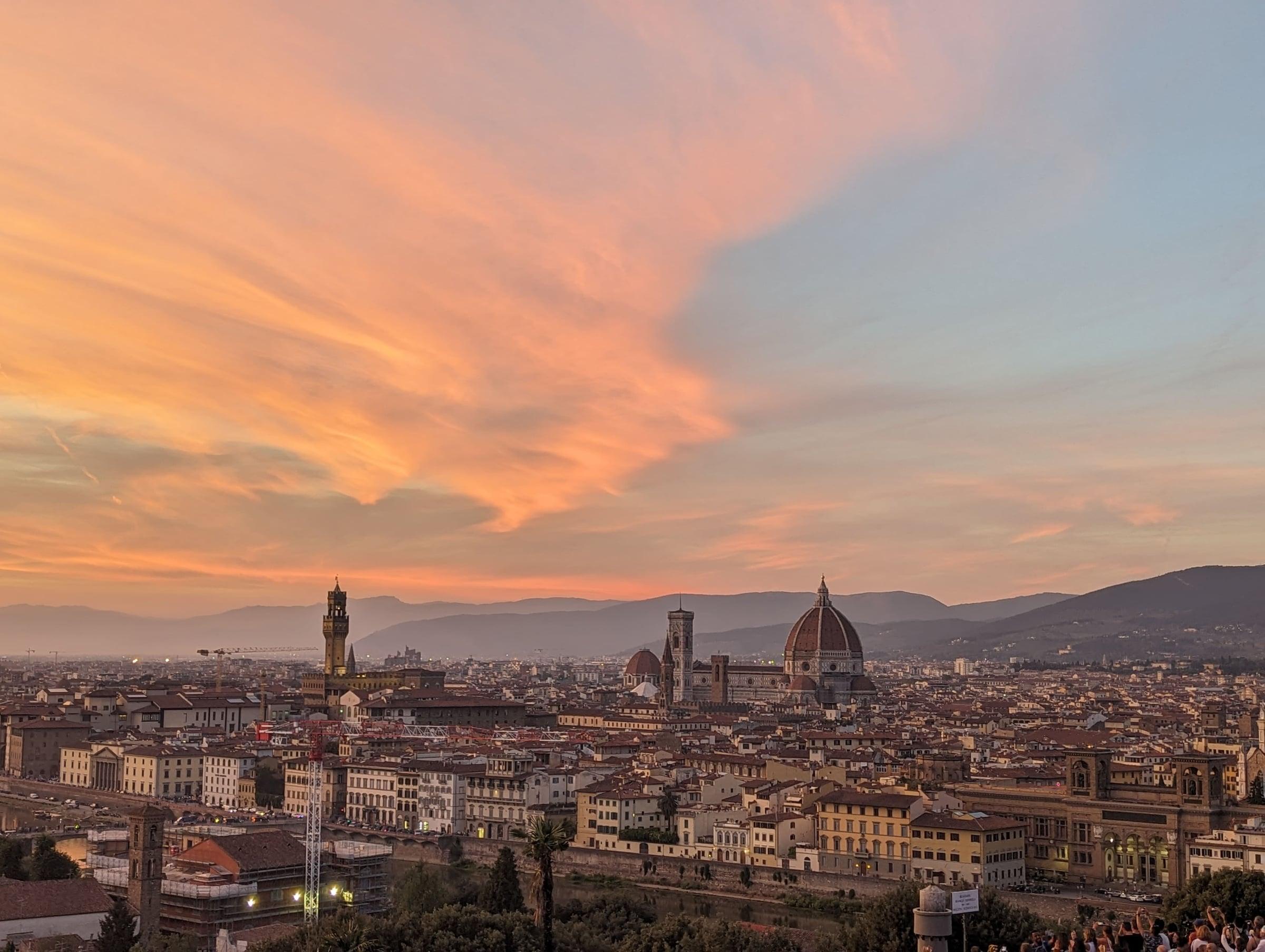
Florence is my favourite city in the world, and I've been trying to explain why ever since I left.
Part of it is admittedly personal. Assassin's Creed II was my favourite game growing up, and it's set in Renaissance Florence — so walking these streets for the first time was a strange kind of homecoming to a place I'd never been. But that's not the whole of it, because the city does something to people who've never touched a controller in their lives.
The honest version is that Florence has a vibe I haven't found anywhere else. I've seen a lot of spectacular churches, plenty of them in Italy — the Milan Duomo among them. The cathedral in Florence hits you like no other. And the area around it, with its bustling market and constant movement, is one of the great places in Europe to simply exist for an afternoon.
This guide covers what's worth your time, what isn't, and one piece of timing advice that can save you a lot of money.
How long do you need in Florence?
Three days is enough for the city itself. That gives you the Duomo, the Uffizi, the Accademia, a proper evening at Piazzale Michelangelo, and — crucially — time to just wander, which is what Florence is actually for.
Anything beyond that is better spent on day trips. Siena, Pisa and Cinque Terre are all easy from here, and I've covered each of them in my 11-day Italy itinerary.
Time your visit for the first Sunday of the month
If you can arrange it, visit on the first Sunday of the month. On that day state museums across Italy — including the Uffizi, the Accademia, and the museums and forts in most other Italian cities — are free to enter.
I went on the first Sunday of October and got into both the Uffizi and the Accademia for nothing. It's the single best-value piece of planning you can do in this country.
The catch is that everyone else knows too, so see the queueing notes below.
Santa Maria del Fiore (the Duomo)
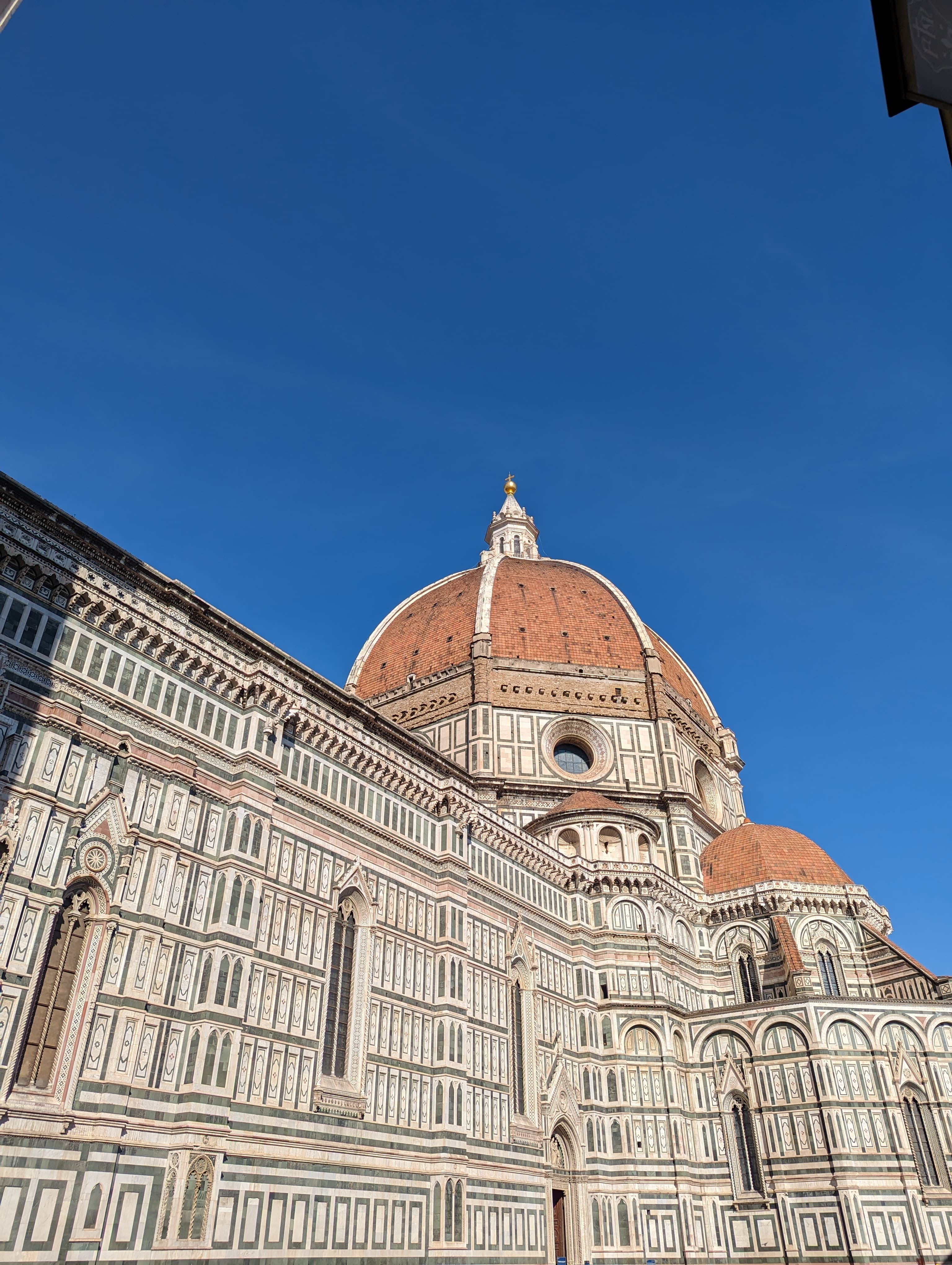
In my opinion the most beautiful church in the world. Brunelleschi's dome is still the largest brick dome ever built, and standing underneath it in the piazza does something that photographs completely fail to convey.
Entry to the cathedral itself is free, and unusually, the exterior is the more impressive half — the marble facade is the thing you'll remember.
One important booking note: I climbed the cathedral, but I missed going up to the top of the dome because those tickets were sold out. If the dome climb matters to you, book it in advance — it's a separate ticket from general entry and it goes early.
Giotto's Campanile and the Baptistery also require their own tickets.
The Uffizi Gallery — the one that changed my mind
I had never been a museum person. The Uffizi changed that completely, and it's because of how it's arranged rather than simply what's in it.
The collection is organised so that you walk through the development of art from flat, one-dimensional religious panels, into two dimensions, and finally into three. You physically move through the evolution of painting — perspective arriving, faces becoming human, depth appearing on a flat surface. By the time you reach the Renaissance rooms you understand why it was a revolution, because you've just watched it happen over about forty minutes of walking.
Da Vinci's earliest paintings are here too, which is worth the entry on its own.
Allow a minimum of 3 hours, and use an audio guide.
Queueing tip: on the free first Sunday I queued from 7am and got in with the first batch at 8. If that sounds excessive, it wasn't — the queue behind me was enormous by opening.
The Accademia — depends who you are
Michelangelo's David is here, and it takes about an hour to see properly.
I queued for an hour and got in during the afternoon on the free Sunday. My honest assessment: if I'd had to pay for it, I'd probably have skipped it. I'm not especially drawn to sculpture, and having just come from the Uffizi it didn't land the same way.
If sculpture is your thing, ignore me entirely. If it isn't, put the money toward another meal.
Where to eat: the best pasta I've ever had
F. N. Pasta Fresca, inside the Mercato Centrale.
This is the best pasta I have eaten anywhere. It's a small operation with real constraints, so plan around them:
- Opens at 11am, closes at 2pm — that's the whole window
- Expect to queue for at least an hour
It is completely worth it. Build your day around this rather than hoping to fit it in.
Piazzale Michelangelo at sunset
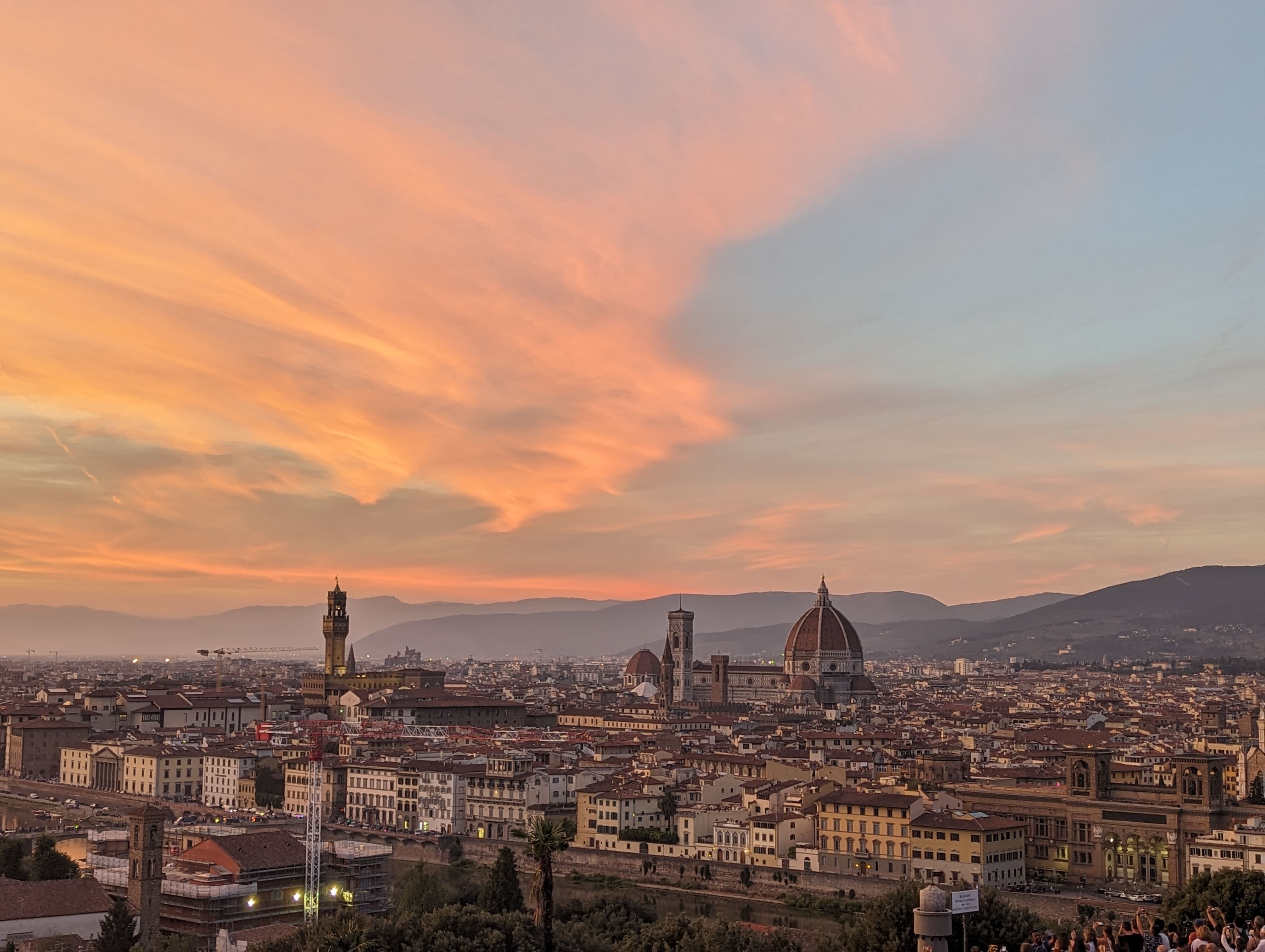
The best sunset view in the city, looking back across the Arno at the whole of Florence with the Duomo rising out of the middle of it.
Arrive about two hours early if you want a good seat. It fills up properly, and the good spots on the steps go first.
It's uphill, so the bus is a perfectly reasonable choice — I walked it, but I wouldn't judge anyone who doesn't. There's usually live music, and stands selling drinks.
Ponte Vecchio and the city centre
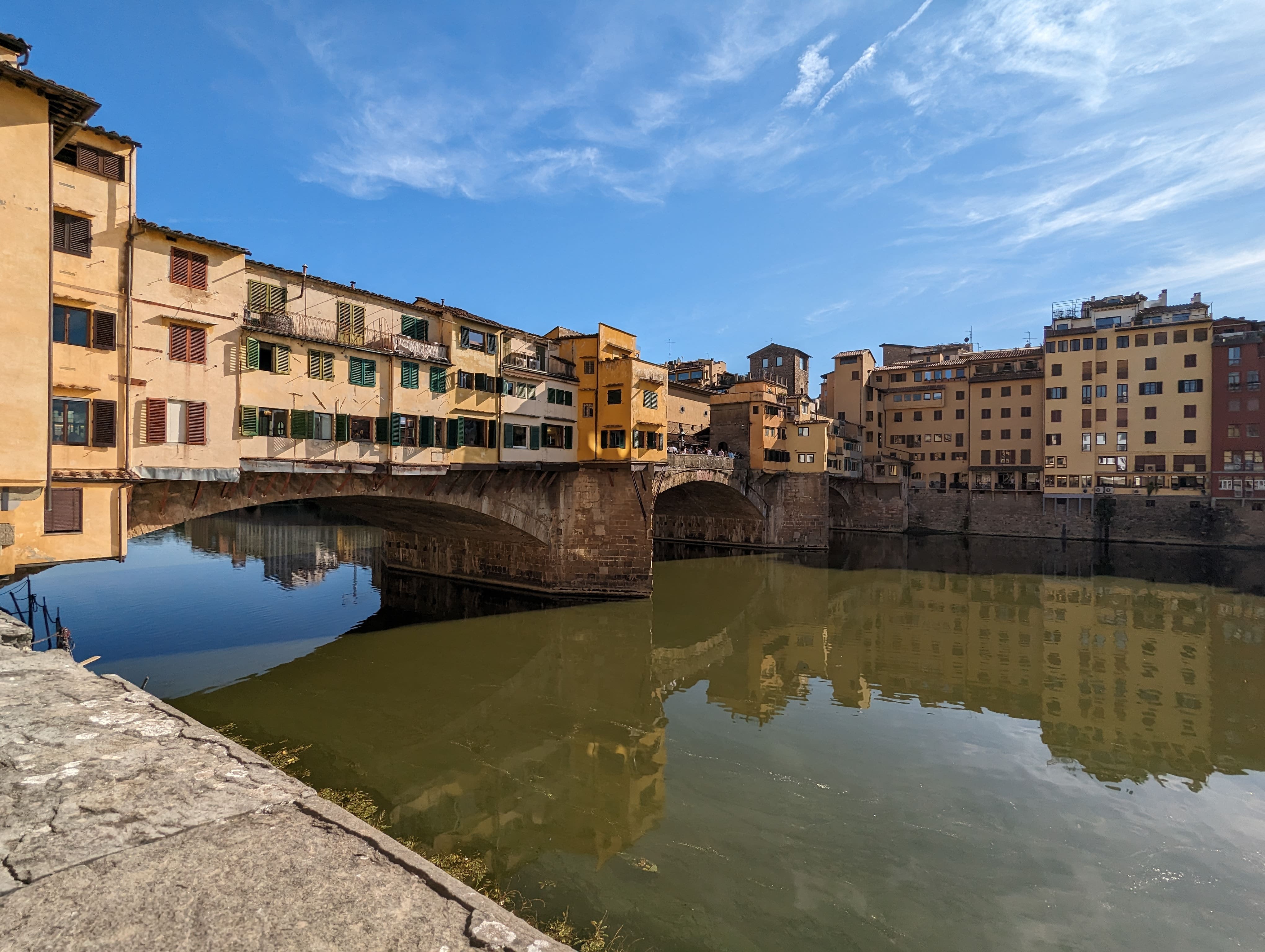
The medieval bridge over the Arno, lined with jewellers' shops. Busy, and worth walking across at least once — ideally early, before the crowds.
Leather shopping: avoid the market
Florence is famous for leather, and the market at Piazza della Repubblica is a tourist trap. Prices are inflated and the quality is inconsistent.
The city is full of separate, proper leather shops where you'll find genuinely good deals and better craftsmanship. Walk a few streets away from the market stalls and buy there instead.
Final thoughts
Florence rewards wandering more than any city I've been to. The sights above are worth seeing, but the thing I actually remember is the centre around the Duomo — the market noise, the light on the marble, the sense that the whole place is still somehow the city it was five hundred years ago.
Florence sits at the heart of my 11-day Italy itinerary, which also covers the day trips out to Siena, Pisa and Cinque Terre. If you're starting in the capital, my 2-day Rome itinerary covers that end of the trip.