Ronda in Half a Day: The Bridge, the Best Viewpoint, and the Ones to Skip
How to see Ronda in two to three hours — the Puente Nuevo, the free viewpoint at the bottom of the gorge, which café viewpoints to avoid, and how to get there from Malaga or Seville.
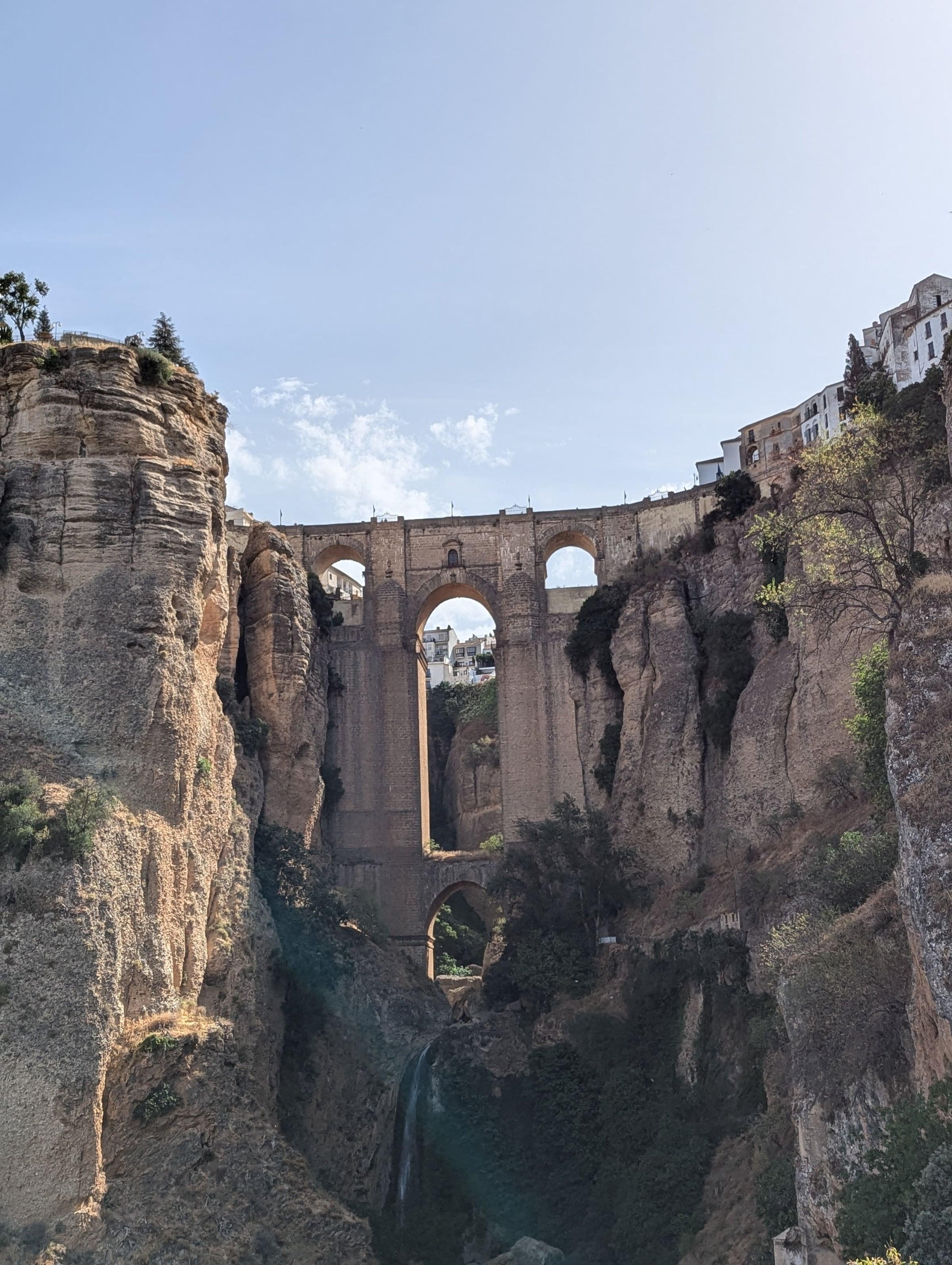
Ronda is a small town in the Andalusian hills, split down the middle by a gorge, with an eighteenth-century bridge thrown across the gap. It is one of the most striking places I saw in Spain — and it needs about three hours, not a day.
That's the whole point of this guide. Most write-ups treat Ronda as a full-day destination and pad it out. It isn't one. Here's how to see the best of it in half a day, and the one tip that will save you money and get you the better photograph.
The bridge
The Puente Nuevo spans a gorge that drops around 100 metres, and the town's buildings sit right up on the cliff edges on both sides. Photographs genuinely undersell it — the scale doesn't register until you're standing underneath it. When I saw it I thought it looked like something out of Lord of the Rings, and I still can't think of a better description.
The town is charming and there's a decent old quarter, but let's be honest with each other: the bridge and the gorge are why you're driving here.
The most useful thing I can tell you about Ronda
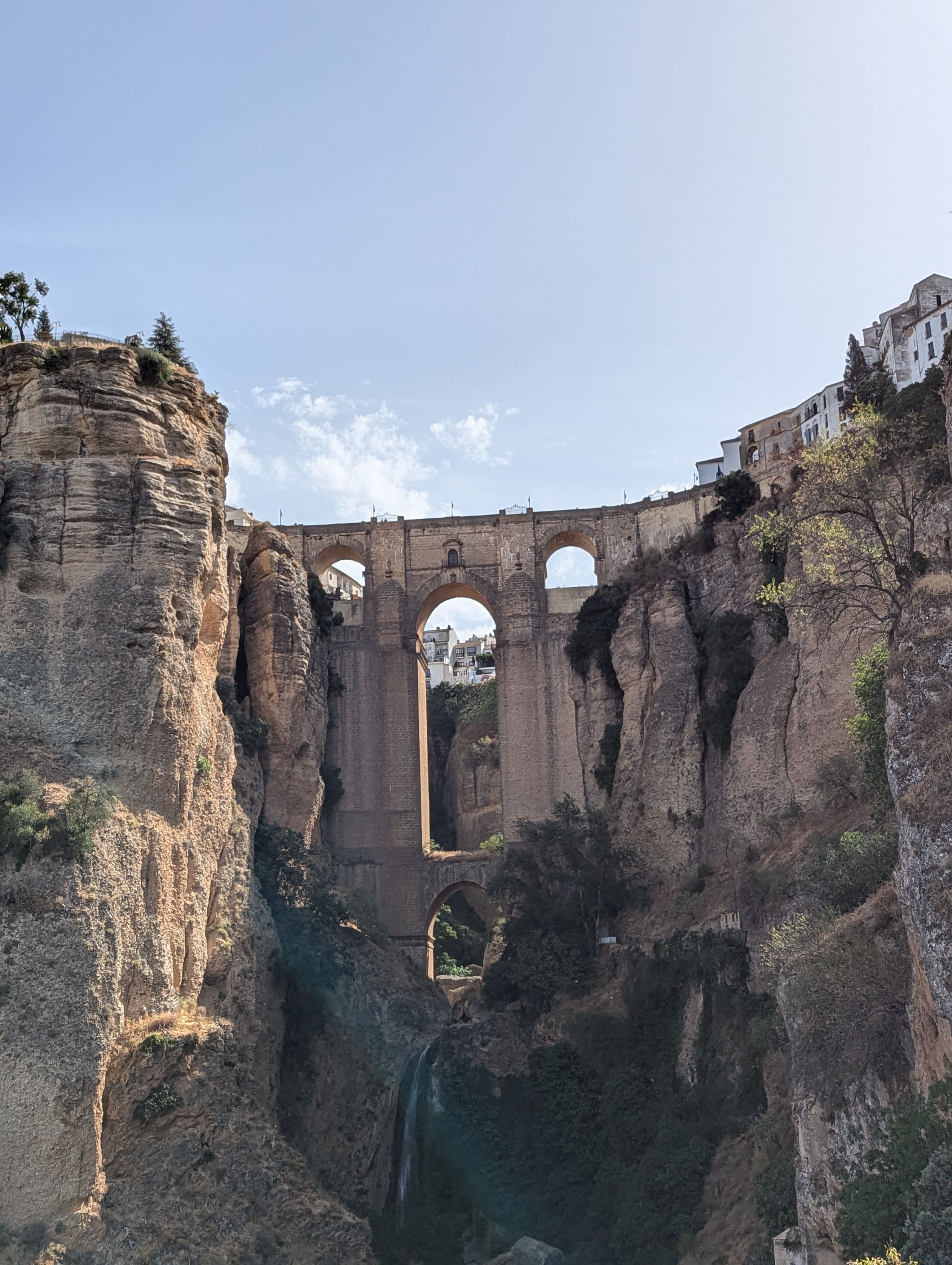
Walk down into the gorge. The best viewpoint is at the bottom and it's free.
Here's what happens to most visitors. You cross the bridge, follow the crowd towards the viewpoints on the town side, and find that several of them belong to cafés and bars — which means you're paying, either in an entry charge or in an obligatory drink, for a view from the top.
Skip all of them. There's a path that switchbacks down into the gorge from near the bridge, it takes around 30 minutes on foot, and it delivers you to a viewpoint looking straight up at the full height of the Puente Nuevo with the waterfall beneath it. It's free, it's dramatically better than anything from the top, and it's the shot everyone recognises.
Be aware it's 30 minutes back up, and it's a genuine climb in the sun. Bring water and don't do it in the middle of an August afternoon.
A three-hour plan
This is roughly how we spent it:
0:00 — Park and walk into the old town. Park on the outskirts rather than trying to get into the centre; the streets around the bridge are tight and busy.
0:20 — Cross the Puente Nuevo. Walk it in both directions. The view down the gorge from the bridge itself is the first proper moment.
0:40 — Walk the old town. The quarter on the far side of the bridge is quiet, whitewashed and pleasant. Alameda del Tajo, the park along the cliff edge, gives you the valley view for free.
1:15 — Take the path down into the gorge. Thirty minutes down, as long as you want at the bottom, thirty minutes back.
2:45 — Eat something, then leave. There are good, unhurried places to eat in the old town.
If you want to add one paid sight, make it the Plaza de Toros — one of the oldest bullrings in Spain, and interesting as a piece of architecture and history regardless of how you feel about the sport.
Getting there
By car — the best option, because it lets you combine Ronda with something else. It's about an hour and a half from Malaga and around two hours from Seville, on good roads through attractive hill country.
By train — Ronda has a station and it's a viable car-free option, though it's a slow and indirect line. Check return times before you commit; the service isn't frequent.
By bus — direct coaches run from Malaga and Seville and are usually quicker than the train.
What to combine it with
Ronda's three-hour size is a feature, not a problem — it makes it the perfect second half of a day.
With the Caminito del Rey. This is what we did and it was the best day of our trip. The Caminito in the morning, then an hour and a half's drive to Ronda for the afternoon. Two of the best things in Andalusia in a single day. See the complete Caminito del Rey guide for the booking and parking detail, which is fiddlier than you'd expect.
As a stop between Seville and Malaga. Ronda sits roughly between the two, so if you're moving between them anyway it costs you almost nothing in extra driving.
With Setenil de las Bodegas, about 20 minutes away — a village with houses built directly into an overhanging rock shelf. We didn't make it, and it's on the list for next time.
Worth knowing
- Go early or late in the day. Ronda takes a lot of coach tours and the bridge area gets crowded in the middle of the day. It's also the best light for photographs at either end.
- Wear real shoes if you're doing the gorge path. It's uneven and steep in places.
- Don't plan to stay the night unless you specifically want a quiet evening in a small town after the day trippers leave — which, to be fair, is a genuinely appealing reason to do it.
Is it worth the drive?
Yes. Of everything I saw in Spain, Ronda's bridge is the image that stuck with me hardest, and my single favourite experience of the trip was standing at the bottom of that gorge looking up at it. For a two-to-three hour stop, nothing else on my route came close to that ratio.
Related reading
- Best places in Spain — Ronda's place in my ranking
- Caminito del Rey: complete guide
- 5 day Andalusia road trip from Malaga
- 2 week Spain itinerary