How to Actually See the Northern Lights: Chase Clear Skies, Not the Kp Index
A practical method for catching the aurora, from three trips with very different results — why cloud cover matters more than the Kp number, where to base yourself, when to go, and what a solar storm actually looks like to the naked eye.
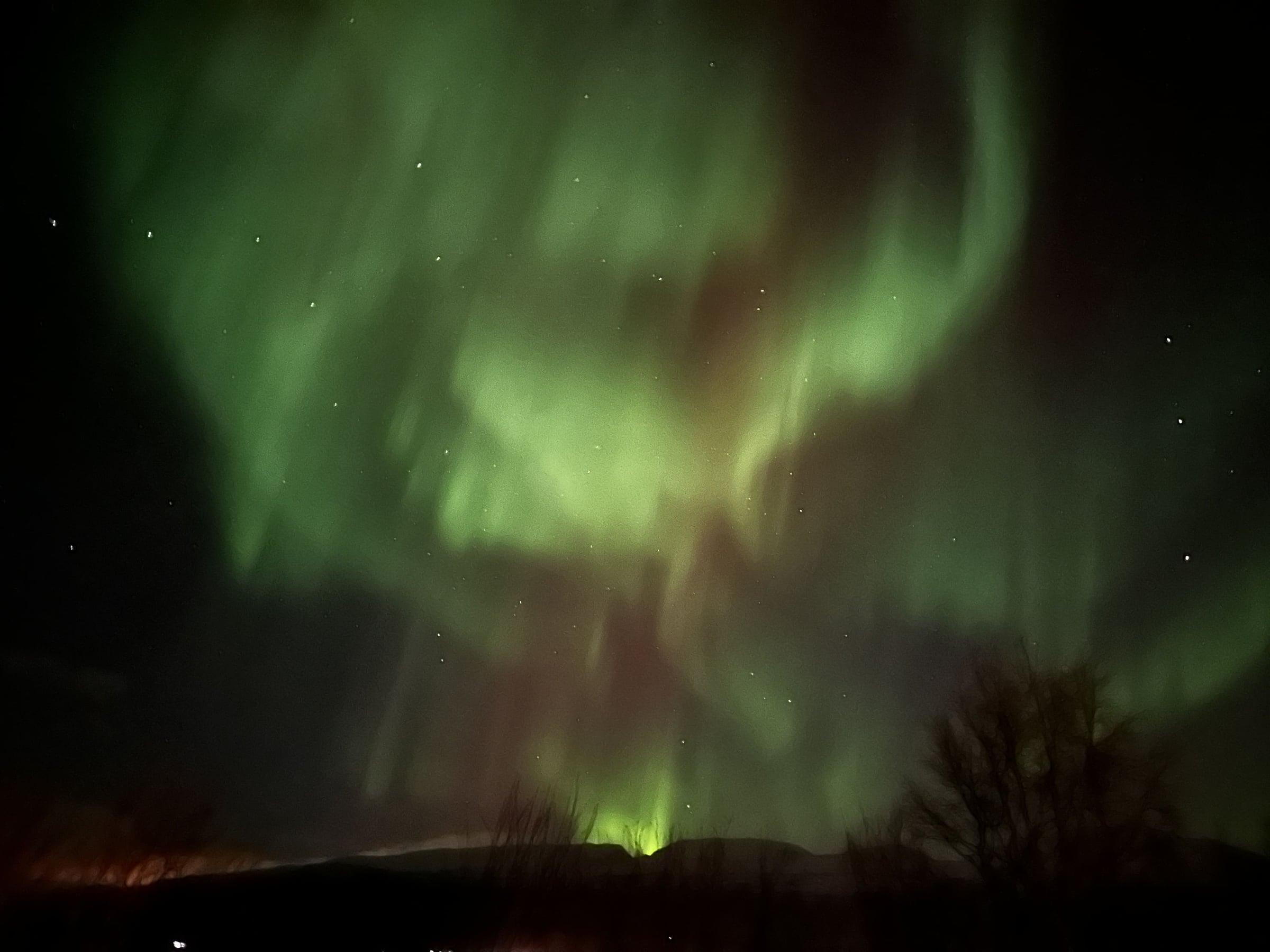
Most northern lights advice tells you to watch the Kp index and wait for a high number. I think that's the wrong instruction, and following it will keep you indoors on nights you could have seen everything.
Here's the method that actually worked, and the three trips that taught me the difference.
My track record, so you can judge the advice
I've chased the aurora three times with three completely different outcomes:
- Five days in December in Finland — not a single glimpse.
- A summer in Iceland — no aurora at all, but I got every hike I wanted.
- Four days in northern Norway in November — an extraordinary show, including a solar storm, and I lost both of my planned hikes to snow and ice.
That's the trade this whole subject turns on, and it's worth stating before any of the tactics: going in aurora season is a decision to spend your days in limited light with your trails under ice, in exchange for your nights.
The core idea: clear skies beat the Kp index
This far north there is essentially always aurora happening. Above the Arctic Circle you are underneath the auroral oval most nights of the winter. The lights are not the scarce resource.
Cloud cover is.
That single reframing changes everything about how you plan. You stop waiting for a number to spike and start doing the only thing that matters: getting yourself under a hole in the clouds.
So use the apps differently
Aurora apps are still worth having — just not for the reason they're marketed.
- Use them for live camera feeds. Webcams pointed at the sky across the region tell you what is happening right now, which no forecast does.
- Use them for cloud cover forecasts. This is the actual planning tool.
- Don't wait on the Kp number. It's not the constraint you think it is at these latitudes.
Where to base yourself: Tromsø or Kiruna
Pick one of these two, and pick it for a specific reason.
Both Tromsø (Norway) and Kiruna (Sweden) sit within three to four hours' drive of several areas that routinely have completely different weather. That's the property you're buying. On almost any given night, somewhere within reach of those two towns has clear sky — and because you're mobile, you can go there.
Base yourself somewhere isolated with one weather system and a bad night is simply a bad night.
What this looked like in practice
On my first night in Norway we drove two and a half hours east to Kilpisjärvi, across the border in Finland.
That wasn't in the itinerary. We went because the live feeds and cloud forecast showed it was the only reachable place with clear skies that night. We committed to a three-country-border drive after dinner on the strength of a weather map.
That was the night the solar storm hit.
When to go
Two separate questions, often confused:
For the lights themselves — any winter month works. The aurora doesn't have an off-season between roughly September and April.
For clear skies — aim for the end of October, or March. These are the windows that give you the best odds on the variable that actually gates the whole thing.
That's why I rate a November trip over my December one. It isn't that December has less aurora; it's that I spent five days in Finland under unbroken cloud.
What you actually need
- A car. This does not work on organised tours alone — tours go where they go, and they can't chase a gap in the cloud 200 km away at midnight.
- Ideally two people who can drive. You will be swapping, at night, in winter, after a long day.
- A willingness to stay up all night. That's the real price of admission. If you're not prepared to be awake at 2 AM, none of the rest matters.
- The ability to drive in genuinely severe winter conditions. See below — this is not a formality.
Do all of that and you're very unlikely to miss out, short of extraordinarily bad luck.
On tyres: every winter rental in Lapland comes with studded tyres as standard. You don't need to request them.
What a solar storm actually looks like
Worth being precise here, because "I saw the northern lights" describes two very different nights.
A normal aurora is hard to see with the naked eye, and it looks static. A faint greyish-green haze that your camera renders far more dramatically than your eyes ever do. Plenty of people come home with impressive photos of something that looked underwhelming in person. That's normal, and it's still worth the trip.
A solar storm is dancing light. During the storm we saw green, red and blue with the naked eye — colour like that, visible unaided, is genuinely rare. The camera made it better still, but this was the version you don't need a camera to believe in.
We had no idea it was coming. There was no clever forecasting involved. We were executing the ordinary method above and got extraordinarily lucky on top of it.
That's the honest split: the method reliably gets you aurora. It cannot get you a storm. Nothing can. Go expecting the static green haze, and treat anything more as a gift.
The part nobody warns you about
The driving is the dangerous part of this, not the cold.
On the drive to Lofoten we hit a snowstorm with winds strong enough that the car was being physically moved by them — ocean on one side, a valley drop on the other, total darkness. It's the only time in my travels I've genuinely feared for my life.
If your plan involves chasing clear skies across a few hundred kilometres of Arctic road at night, take that seriously. Be prepared to stop and wait out a storm rather than push through it. No aurora is worth the alternative.
The short version
- Clear skies, not the Kp index. There's always aurora up there; cloud is the only real variable.
- Use aurora apps for live webcams and cloud forecasts, not for a magic number.
- Base in Tromsø or Kiruna, each within 3–4 hours of several distinct weather zones.
- End of October or March for the best clear-sky odds; any winter month will produce lights.
- A car, two drivers, and a willingness to be awake all night. That's the formula.
- Expect a static green haze. A dancing, multicoloured storm is luck, not planning.
- Respect the winter driving. It's the genuine risk on this trip.
Related reading
- 4 days in northern Norway — the trip this method came from, including the night of the storm
- What to pack for Iceland — the layering advice transfers directly
- Driving in Iceland — more on winter driving in the north