4 Days in Northern Norway: Catching the Aurora During a Solar Storm
A 4-day northern Norway itinerary built around chasing the northern lights — what a solar storm actually looks like, why clear skies matter more than the Kp index, the drive to Lofoten, and the fishing villages of Reine, Hamnøy and Henningsvær.
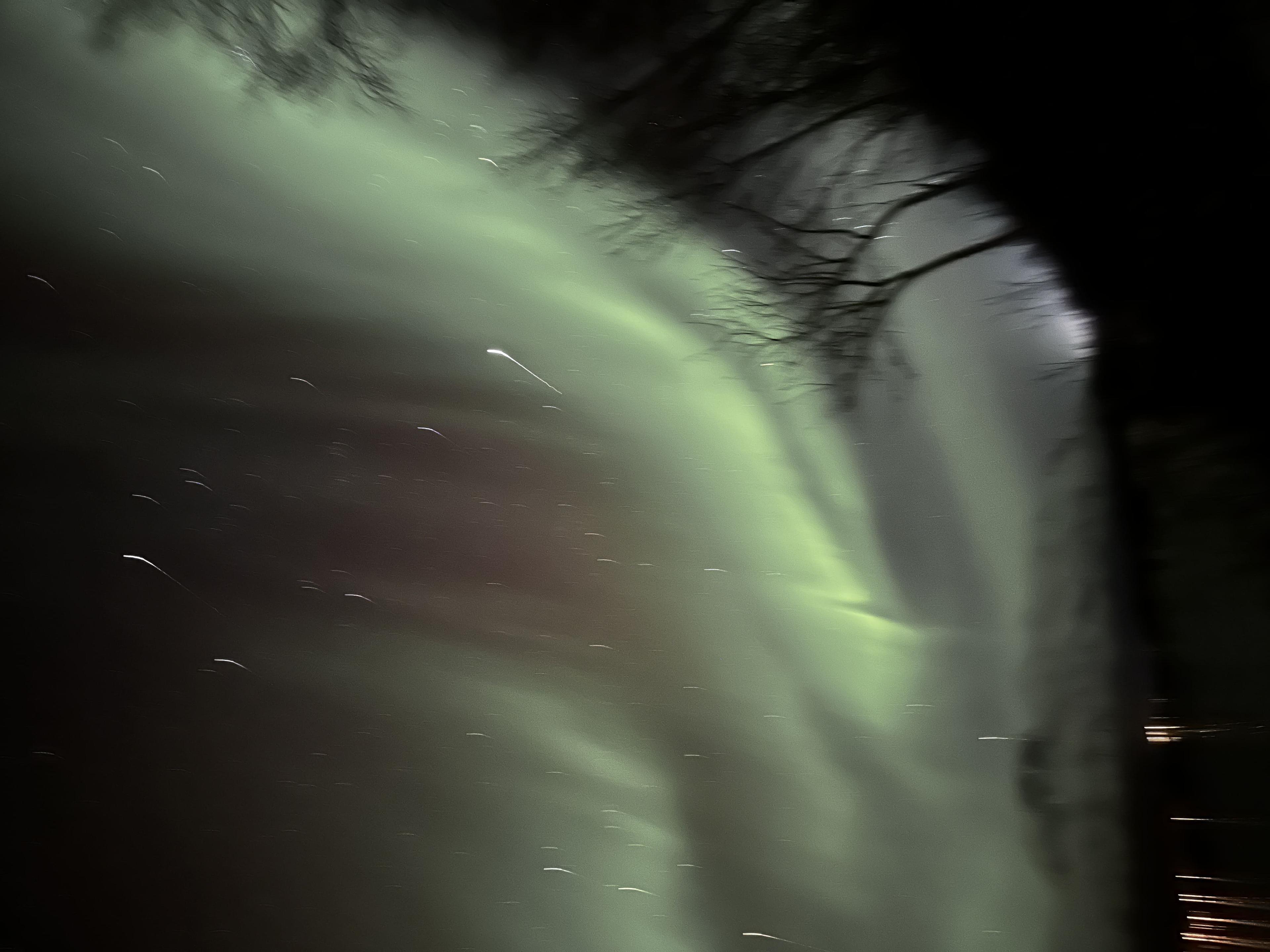
Four days in Arctic Norway in early November, built entirely around chasing the aurora. We got a solar storm, which is the once-in-a-lifetime version of this, and we lost both of our planned hikes to snow and ice.
That trade was deliberate, and I'd make it again. But the honest framing matters: in November the lights are the trip and the hikes are a gamble. Ours didn't come off.
What a solar storm actually looks like
Worth being precise about this, because "we saw the northern lights" covers two completely different experiences.
A normal aurora is hard to see with the naked eye and it looks static. A faint grey-green smear that your camera renders far more dramatically than your eyes do. That's what most people get, and it's still worth the trip.
A solar storm is dancing light, and we saw green, red and blue with the naked eye. Colour like that, visible unaided, is rare. The camera made it better still, but this was the version you don't need a camera to believe.
We had no idea it was coming. There was no plan to catch a storm — we were doing the normal thing and got extraordinarily lucky.
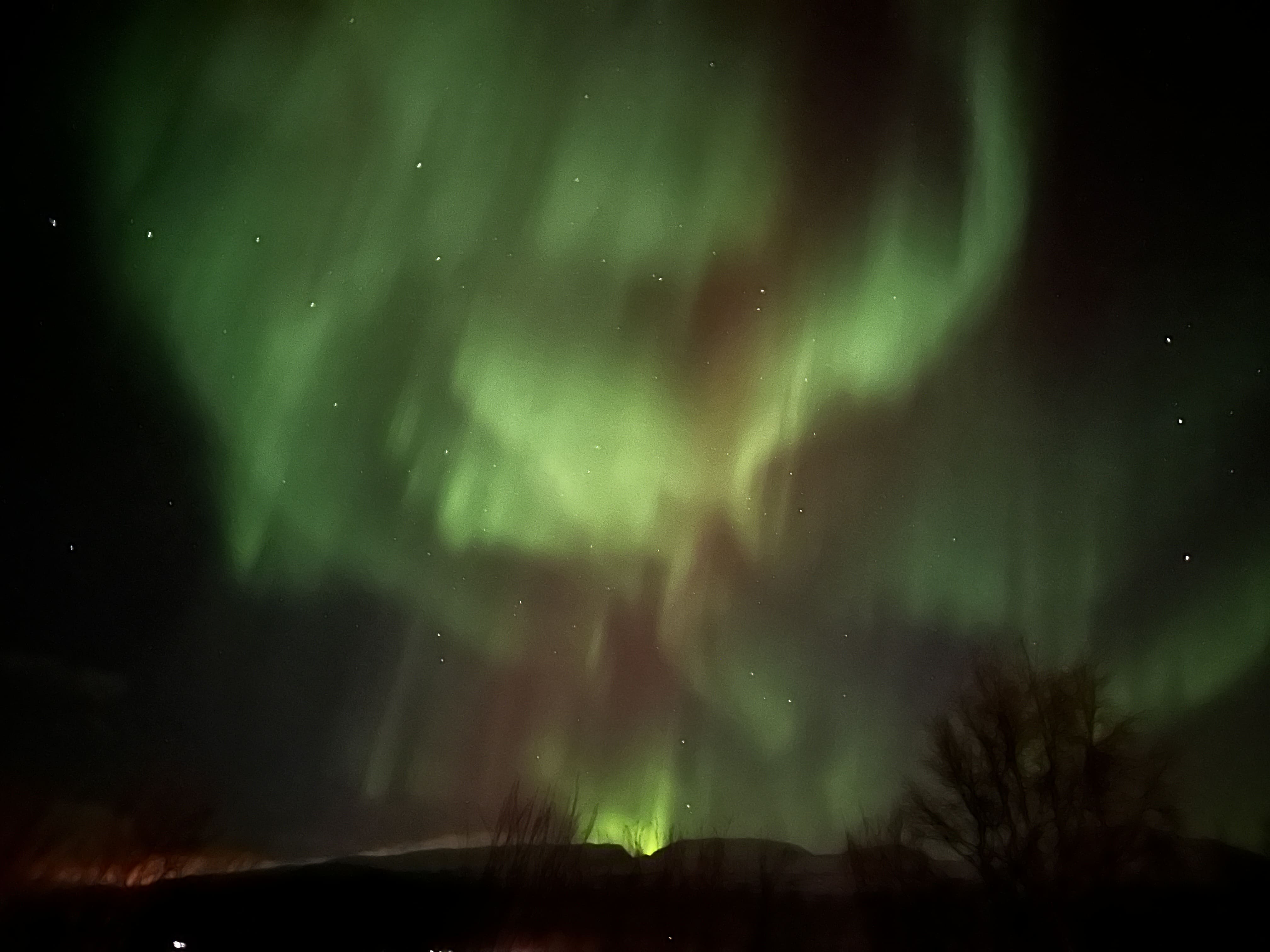
The one thing that made this work
The short version: chase clear skies, not the Kp index. This far north there is essentially always aurora happening, so cloud cover is the only variable that really decides your night. Base yourself somewhere you can drive out from — Tromsø or Kiruna — and be willing to move at short notice.
I've written the full method up separately, along with what three trips with very different outcomes taught me: how to actually see the northern lights.
Day 1: Tromsø, then a 2.5-hour chase into Finland
Arrive into Tromsø, the Arctic capital, in the late afternoon. The town centre is walkable and the Arctic Cathedral is worth the stop, framed against snowy mountains.
Then the night's real work. We drove east to Kilpisjärvi, over the border in Finland — about two and a half hours.
We didn't plan that. We went because the live feeds and the cloud cover forecast said Kilpisjärvi was the only place we could reach with clear skies that night. That's exactly the method above in action: the destination was chosen at short notice by weather, not by itinerary.
It's also the night the storm hit.
Day 2: The drive to Lofoten, and the one time I was genuinely frightened
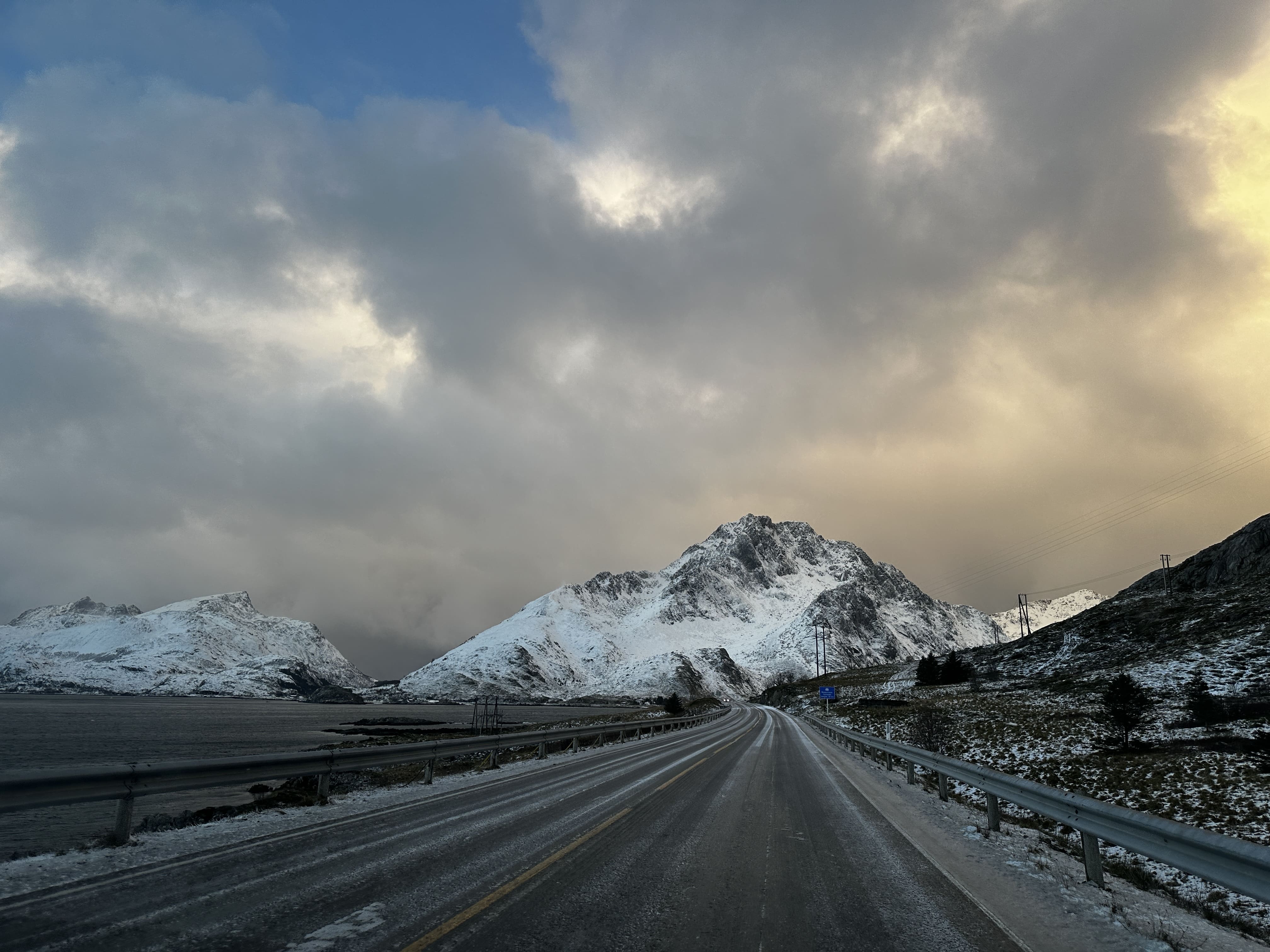
Roughly eight hours from Tromsø to Lofoten, and the drive is a headline attraction in its own right — snow-covered peaks, icy fjords, and endless reasons to pull over.
Stop in Narvik about midway for food and to stretch.
A serious word about the conditions
This was the only time in my travels I've genuinely feared for my life.
We hit a snowstorm on the way to Lofoten with winds strong enough that the car was being moved by them. Ocean on one side, a valley drop on the other, and total darkness.
I'm not including that to be dramatic. If you're planning this trip, understand that the winter driving is not a formality — it's the hardest and most dangerous part of the whole thing, and it's a real reason to have a second driver and to be prepared to stop somewhere and wait rather than push on.
Day 3: Hamnøy, Reine, and two hikes we didn't get
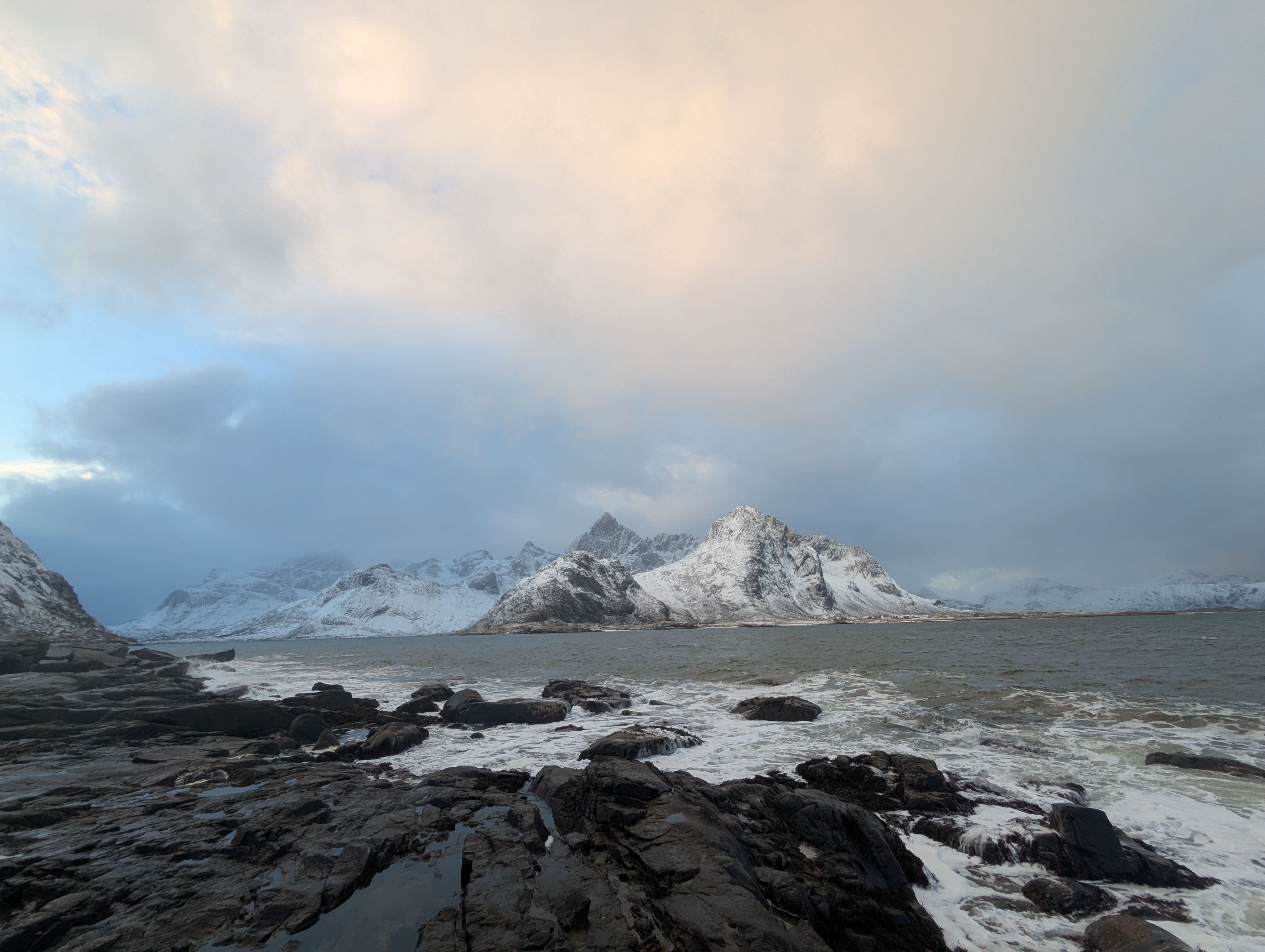
Hamnøy and Reine are the two fishing villages every photograph of Lofoten comes from — red cabins under sheer peaks, still water.
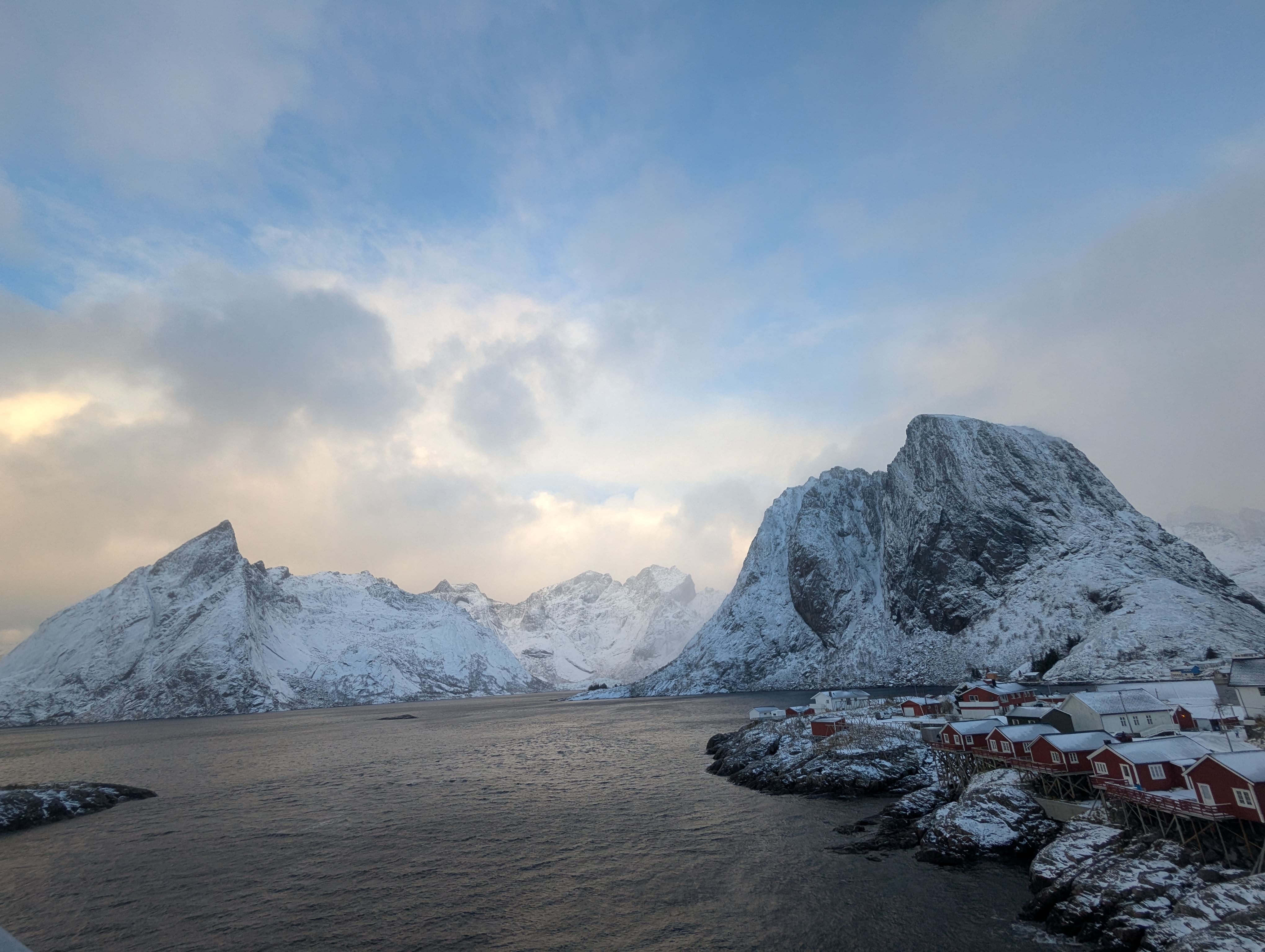
The hikes, honestly
Reinebringen — the steep climb with the famous view over Reine. In November the trail was under snow and ice and it wasn't safe to attempt. We didn't.
Kvalvika Beach — we tried this one in the afternoon and turned back halfway in heavy snow. Even the half we walked was spectacular, but we didn't reach the beach.
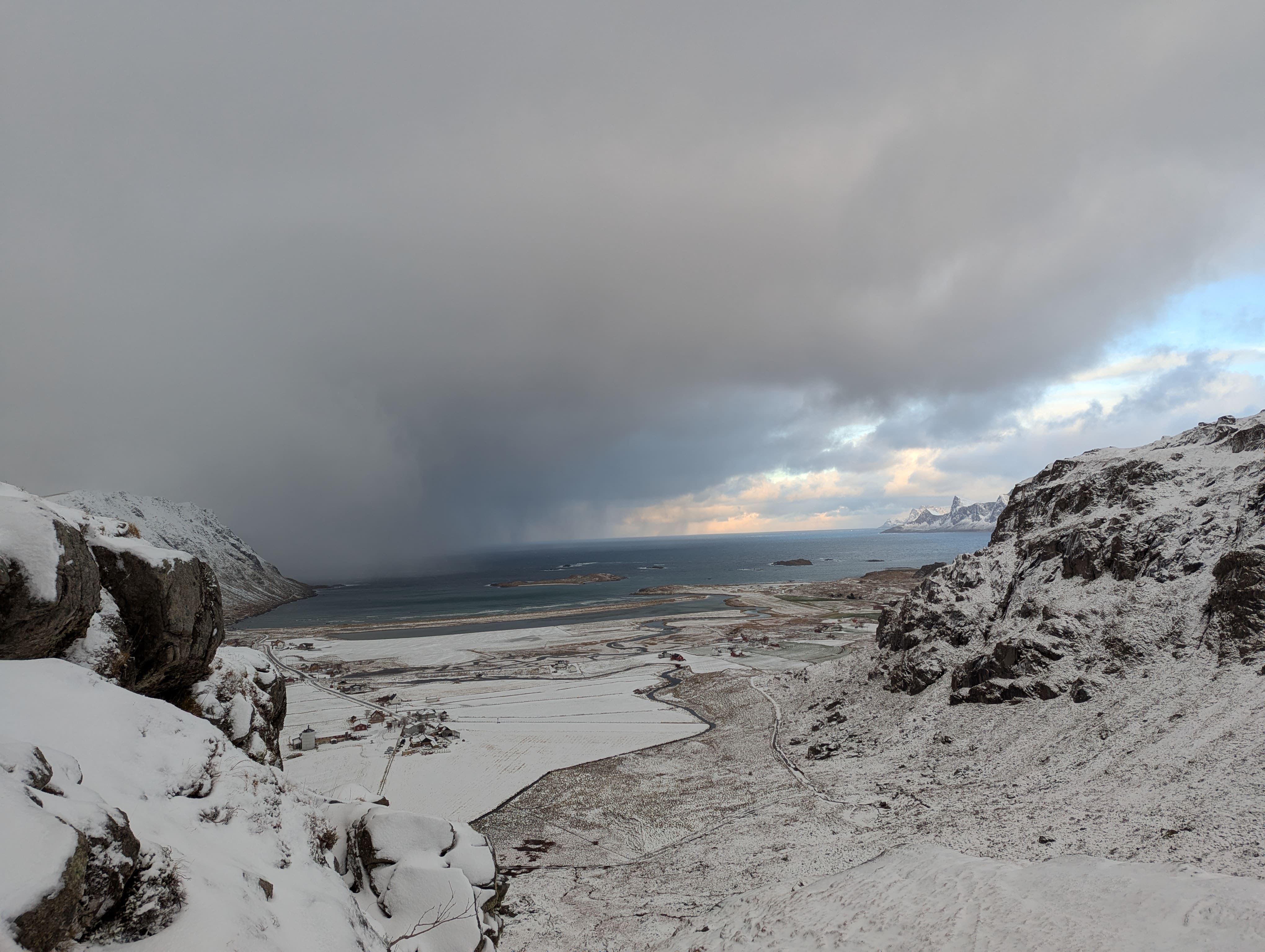
Both are summer hikes. If you're coming for the aurora, plan on the assumption you won't get them, and treat it as a bonus if conditions surprise you.
Day 4: Nusfjord, Henningsvær, and the long drive back
Be realistic about this day: it's two short stops and then eight hours of driving.
Nusfjord, one of Norway's oldest preserved fishing villages, is beautiful — and about 20 minutes long. There isn't much to do beyond looking at it, which is fine as long as you know that going in.
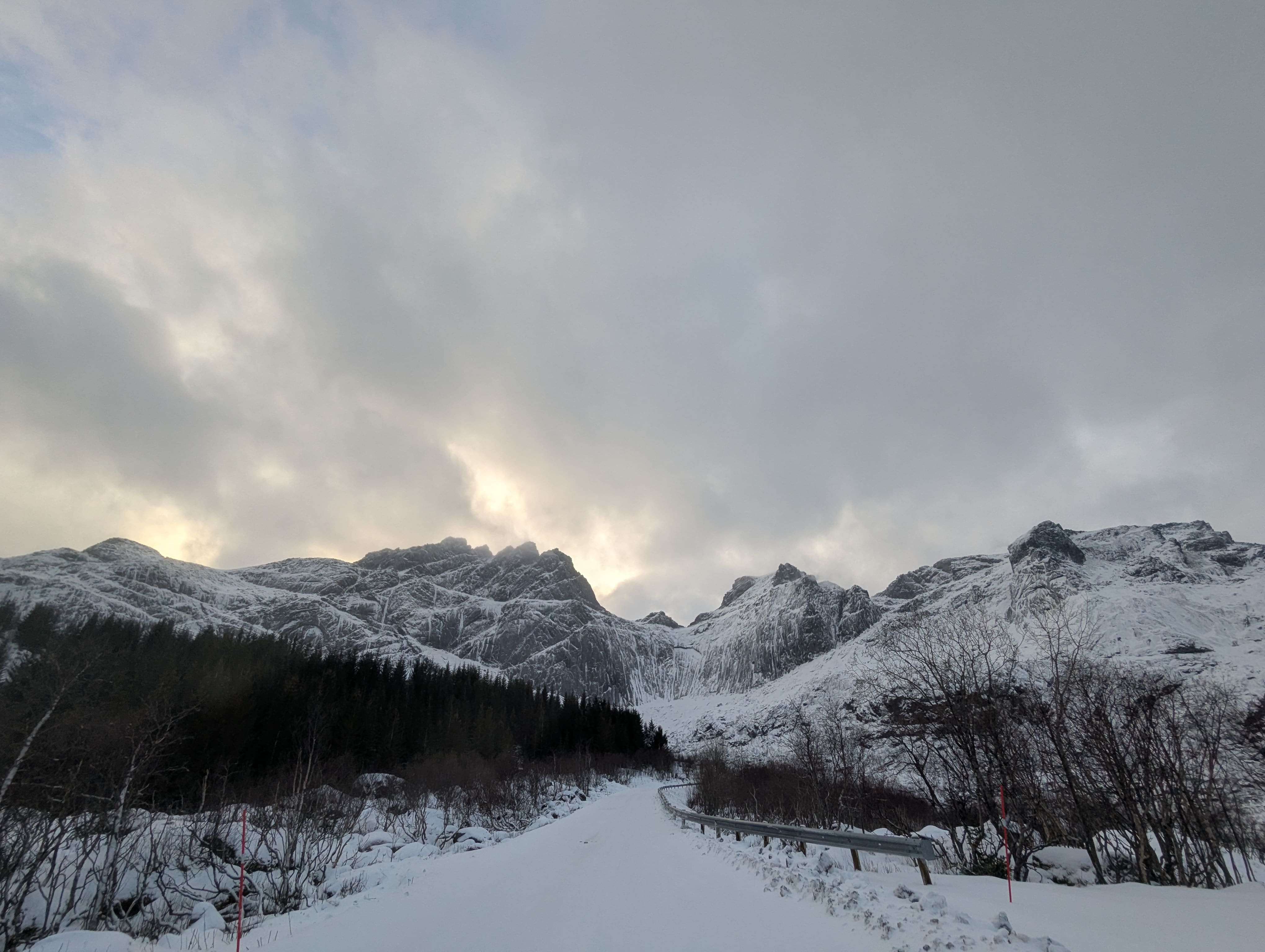
Henningsvær we went to for one thing: the famous football pitch, sitting on the rocks surrounded by water and mountains. Same story — it's a stop, not an afternoon.
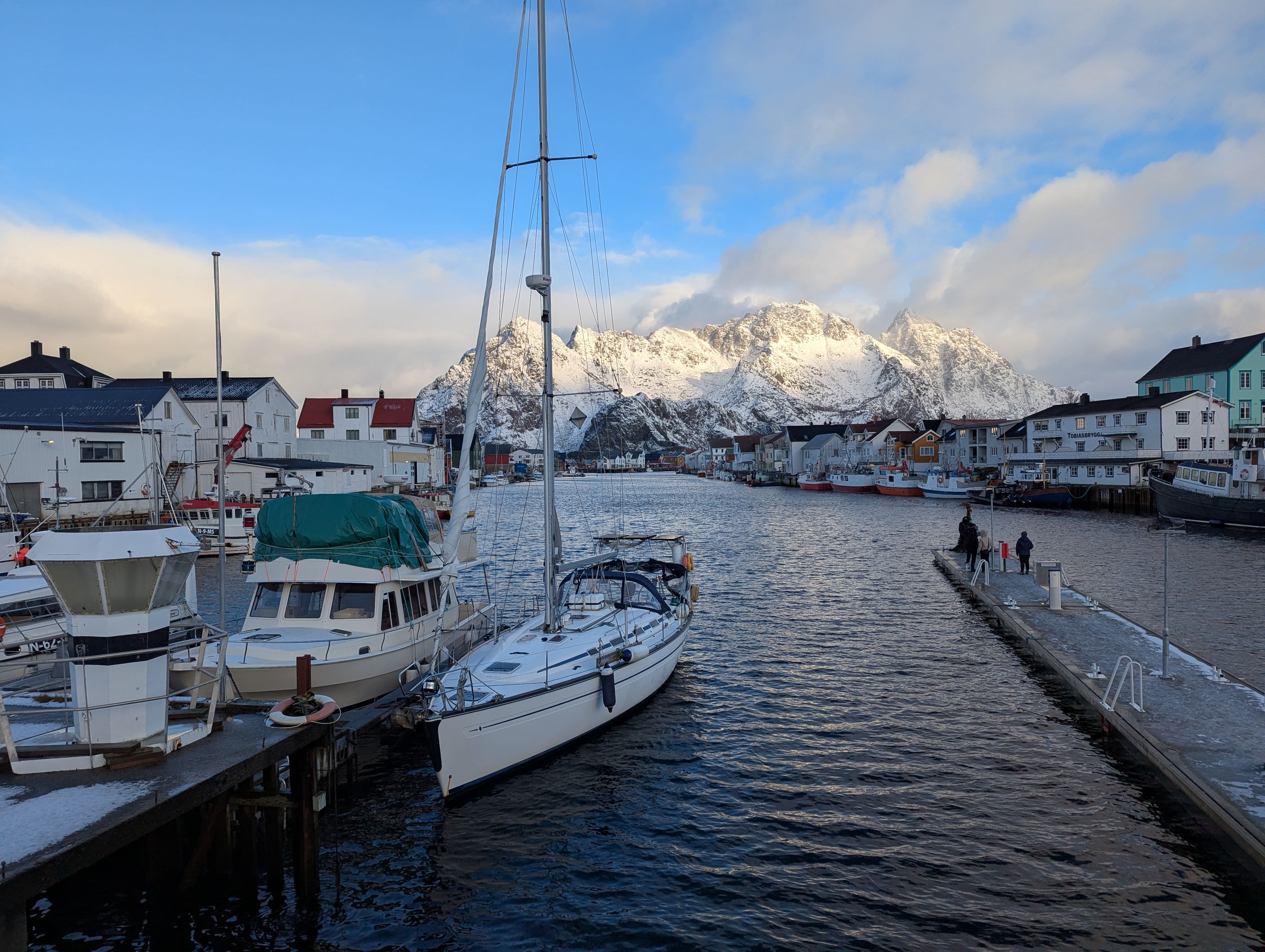
Then back to Tromsø. We were two of us driving in shifts, and it was stressful, but we made it work because we didn't want to cut Lofoten short. Watch for aurora on the way if the sky is clear.
That both villages are genuinely brief is what makes this day survivable. Don't schedule anything else into it.
Worth knowing
- In November, expect 5–6 hours of daylight and treat any hike as a gamble. Reinebringen and Kvalvika both beat us.
- Nusfjord and Henningsvær are 20-minute stops. Knowing that is what makes day 4 possible.
- Two drivers. The Lofoten round trip is 16 hours of winter driving across two days.
- Studded tyres come as standard on winter rentals in Lapland — you don't need to request them.
- Winter driving here is the genuine risk. Be prepared to stop and wait out a storm rather than push through it.
- Pack thermals, waterproof boots, snow spikes, a headlamp and layers.
For the aurora-chasing method itself, see how to actually see the northern lights.