8 Day Mainland Greece Itinerary (Without a Car)
Eight days across mainland Greece on buses and trains — Athens, a day trip to Delphi, Nafplio and Epidaurus, and two nights at Meteora for the monasteries at sunset.
Everyone goes to Greece for the islands. I went in the last week of March, with a friend, and never saw one — this was mainland only, and the best day of it was walking up to the Meteora monasteries and staying until the sun went down.
Two things worth saying up front. We did the entire trip without a car, on buses and trains, and it was never a problem — everything below is reachable on public transport. And end of March turned out to be a good call: cool enough to walk all day, and nothing was crowded.
Eight days, seven nights: one in Thessaloniki, three in Athens, two at Meteora, and a last one back in Thessaloniki.
Day 1: Thessaloniki
I'll be honest about this one, because the rest of the trip is better: if I did it again I'd skip Thessaloniki. There isn't much to do there. We started and ended here because that's where the flights were, and that's the only real reason to give it time.
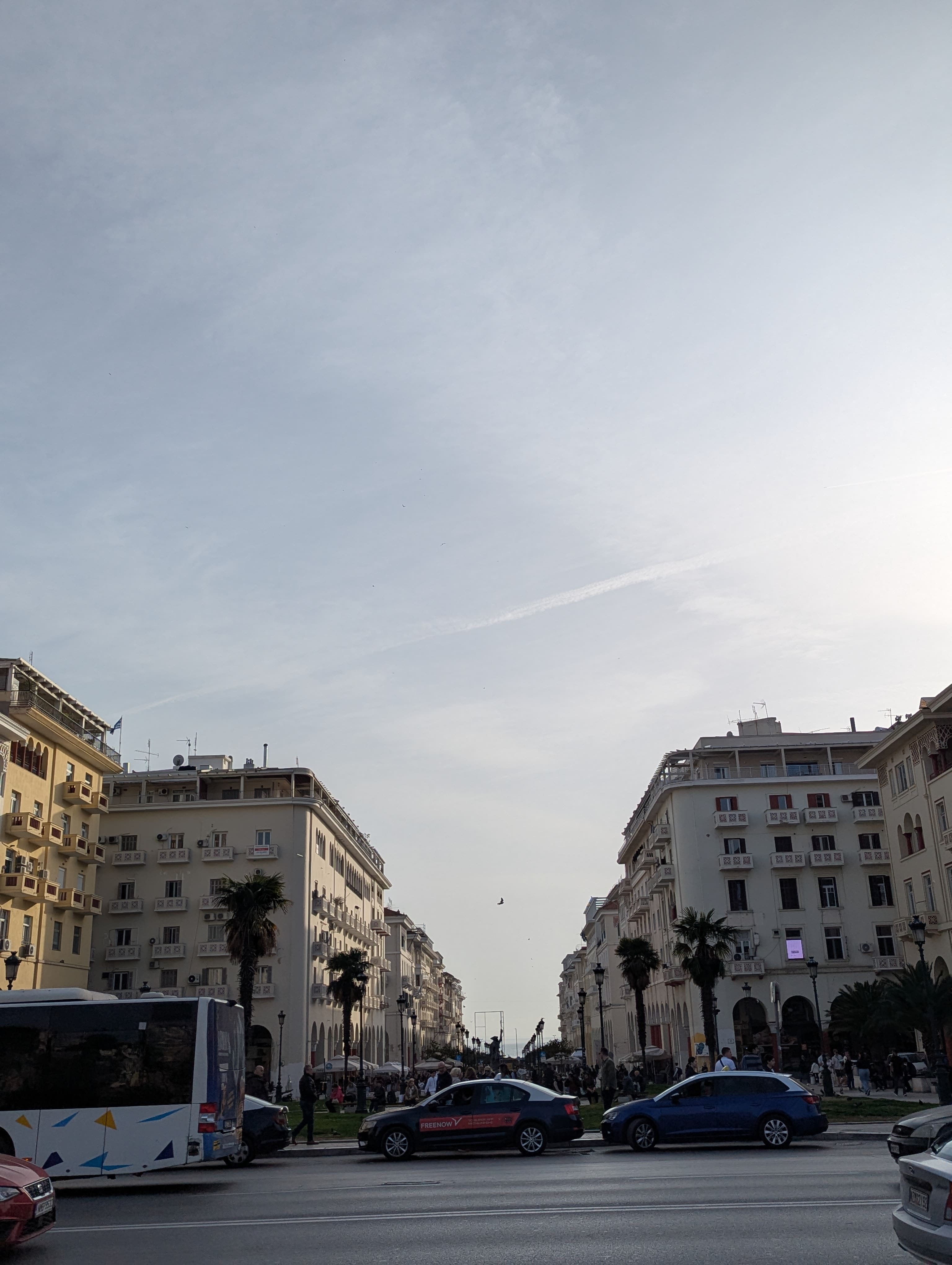
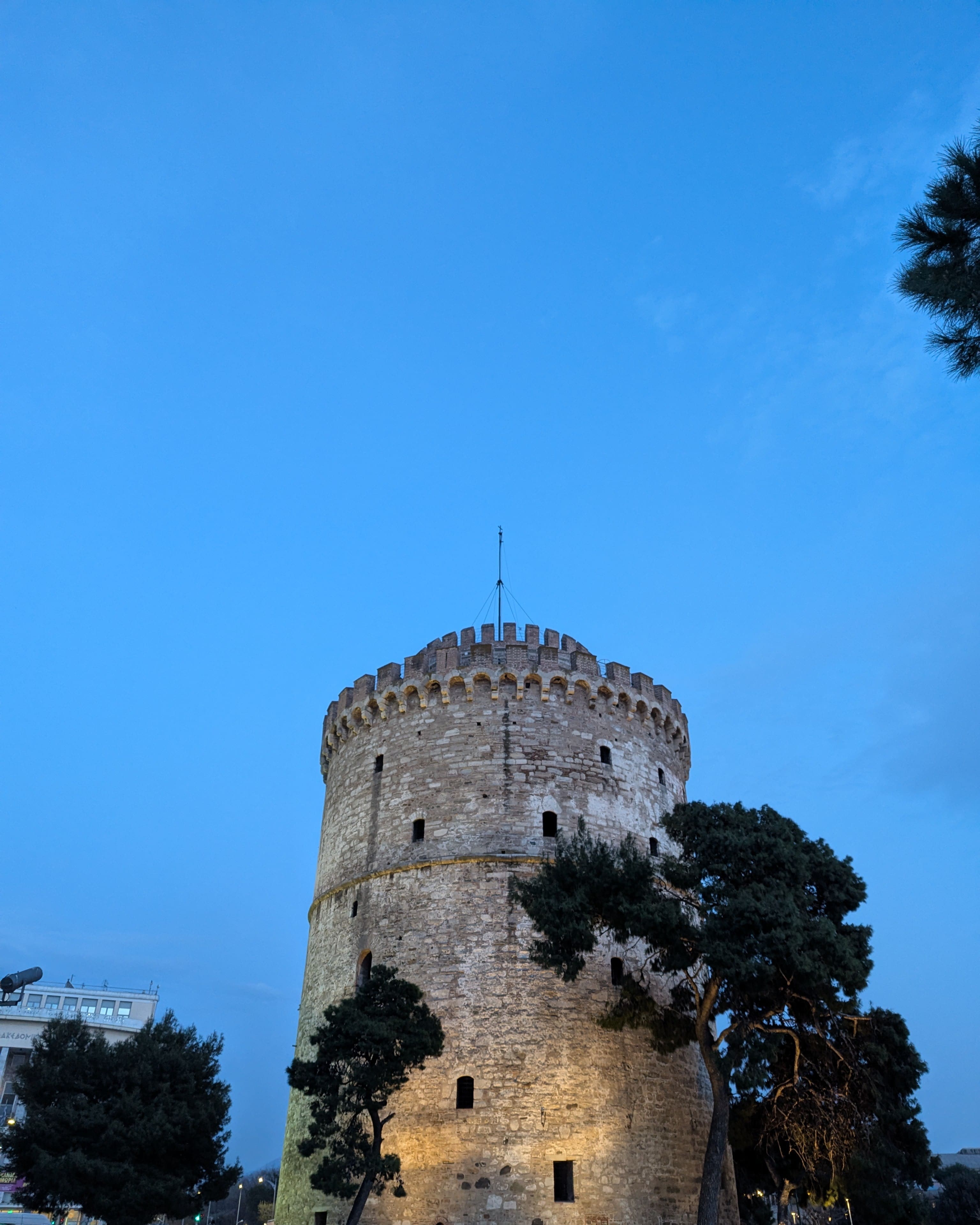
If you're there anyway, it's a pleasant enough evening. Aristotelous Square is the city's big open plaza, facing the water and lined with cafés, and the White Tower on the seafront is the landmark everyone photographs — you can climb it for a view along the waterfront.
Day 2: Down to Athens
Thessaloniki to Athens is a long ride south by train or bus, and it takes a good chunk of the day. Book it and enjoy the fact that you're not driving it.
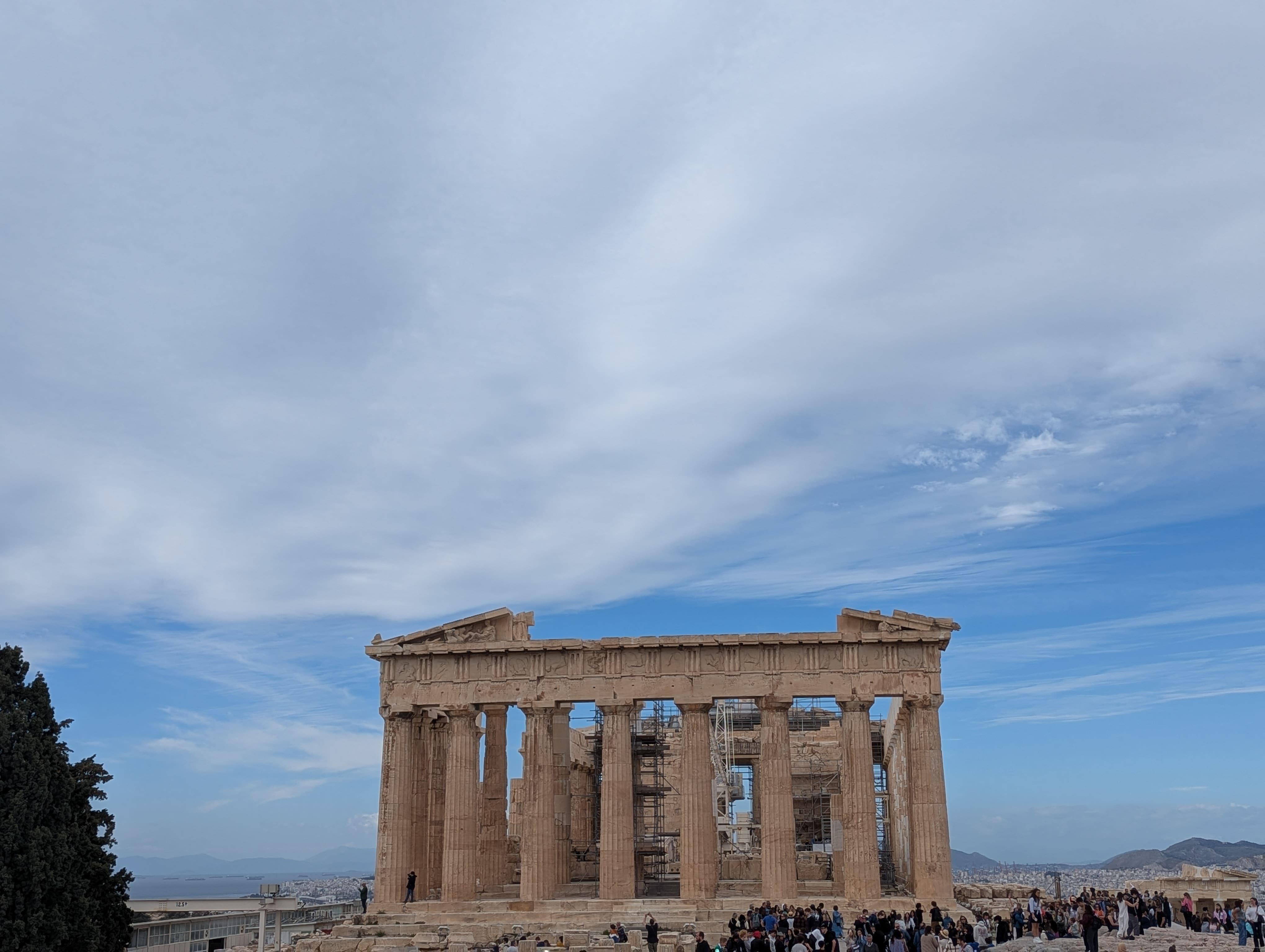
That leaves an afternoon and an evening in Athens, which is enough to get straight into the good part — the Acropolis and the Ancient Agora below it. The Parthenon is the thing you came for; the Agora, with the remarkably intact Temple of Hephaestus, is where ordinary Athenian life actually happened, and it's quieter.
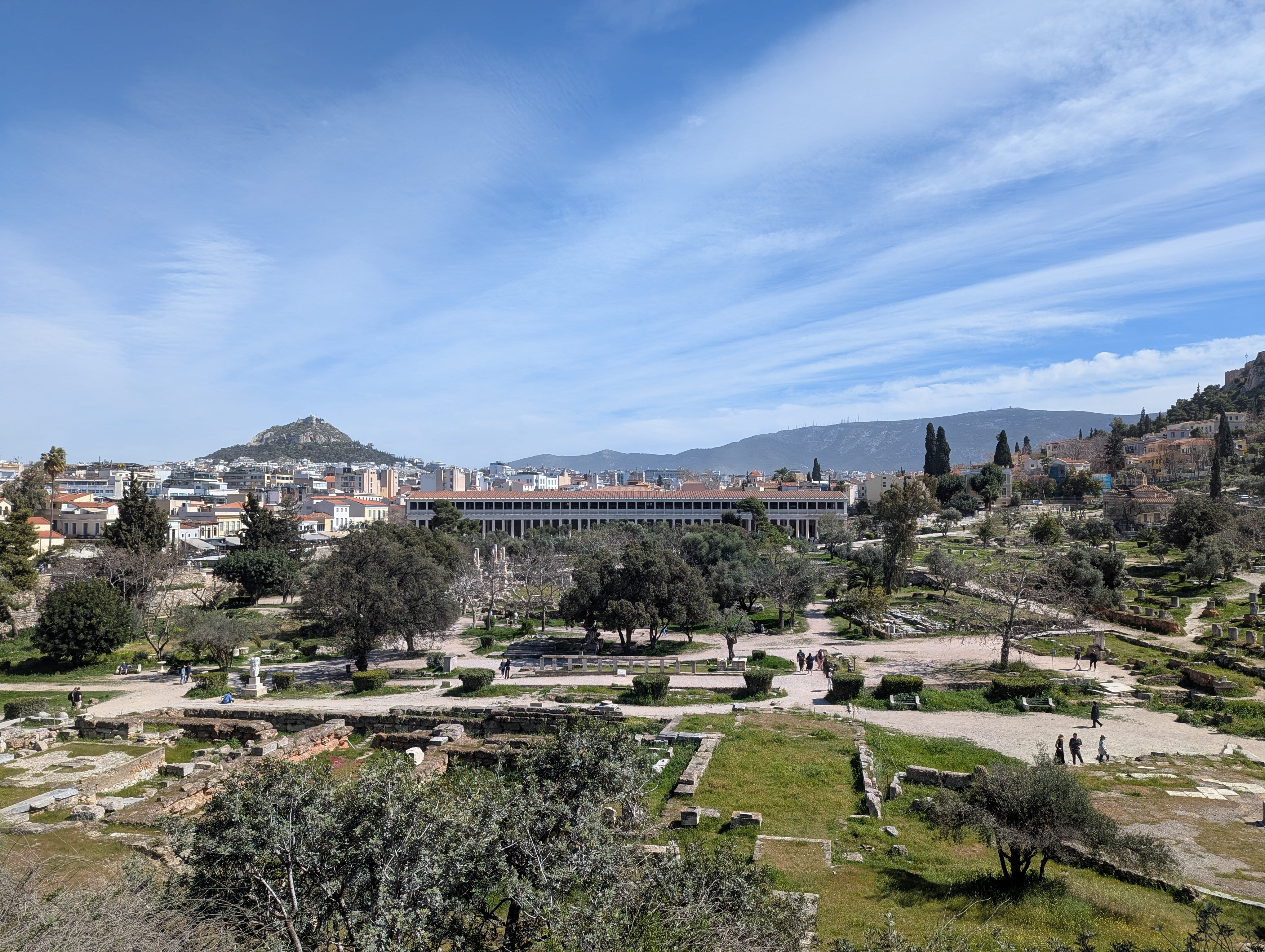
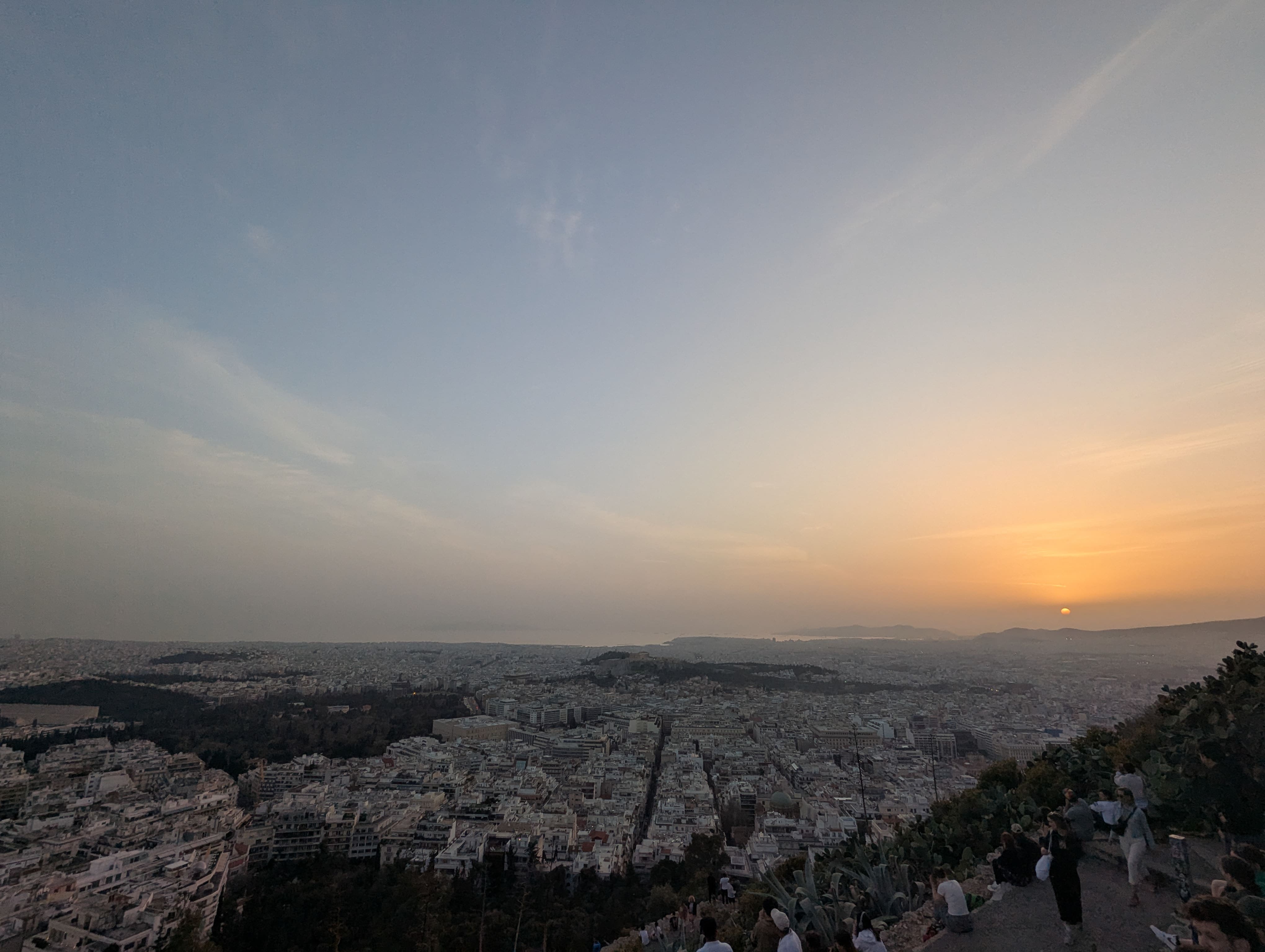
Then a sunset viewpoint. Athens has two obvious ones — Areopagus Hill, the rock right below the Acropolis, and Lycabettus Hill, the high one across the city. I did both, on separate evenings, and I'd recommend that rather than picking. Areopagus puts you directly under the Acropolis; Lycabettus puts the Acropolis in the view.
Day 3: Delphi
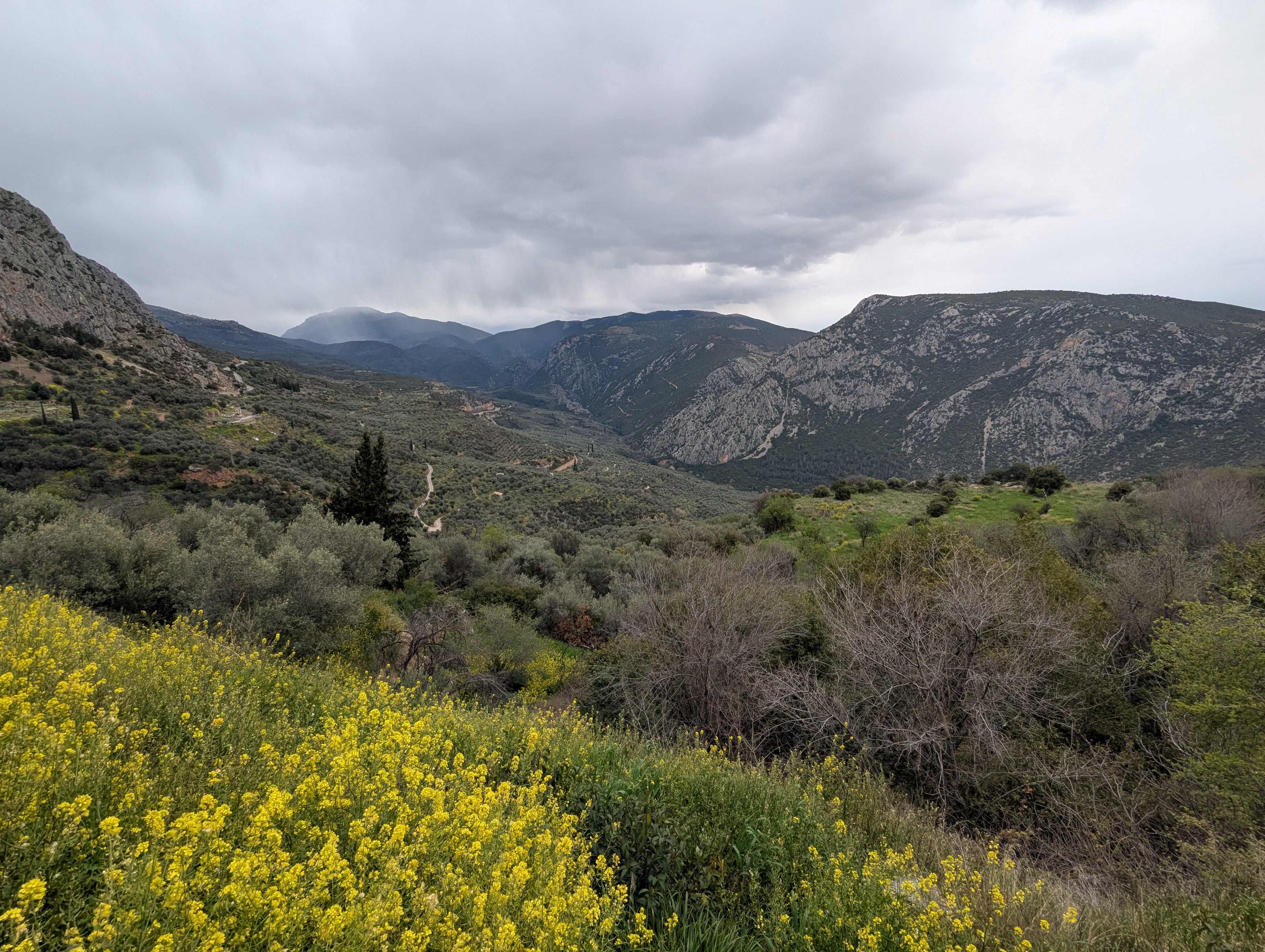
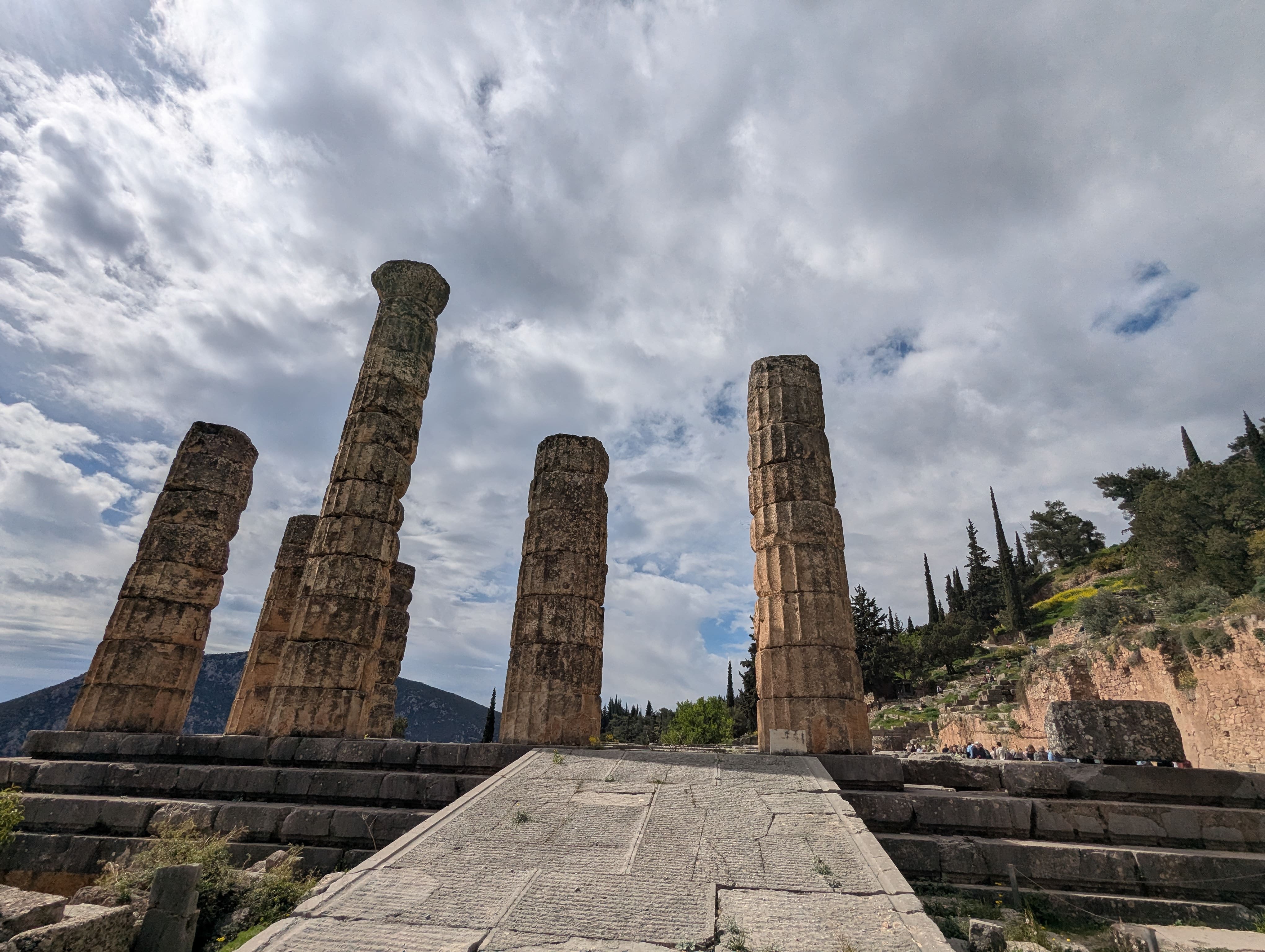
A day trip out to Delphi, in the mountains a couple of hours northwest, and it's worth the travel purely for the history. This was the centre of the world as far as the ancient Greeks were concerned, and the place where the oracle was consulted before anything important happened.
What you get is a sanctuary built into a steep hillside on Mount Parnassus, with the Temple of Apollo partway up and the view opening out below you as you climb. The site museum is worth the extra half hour — a lot of what was originally standing here is in there.
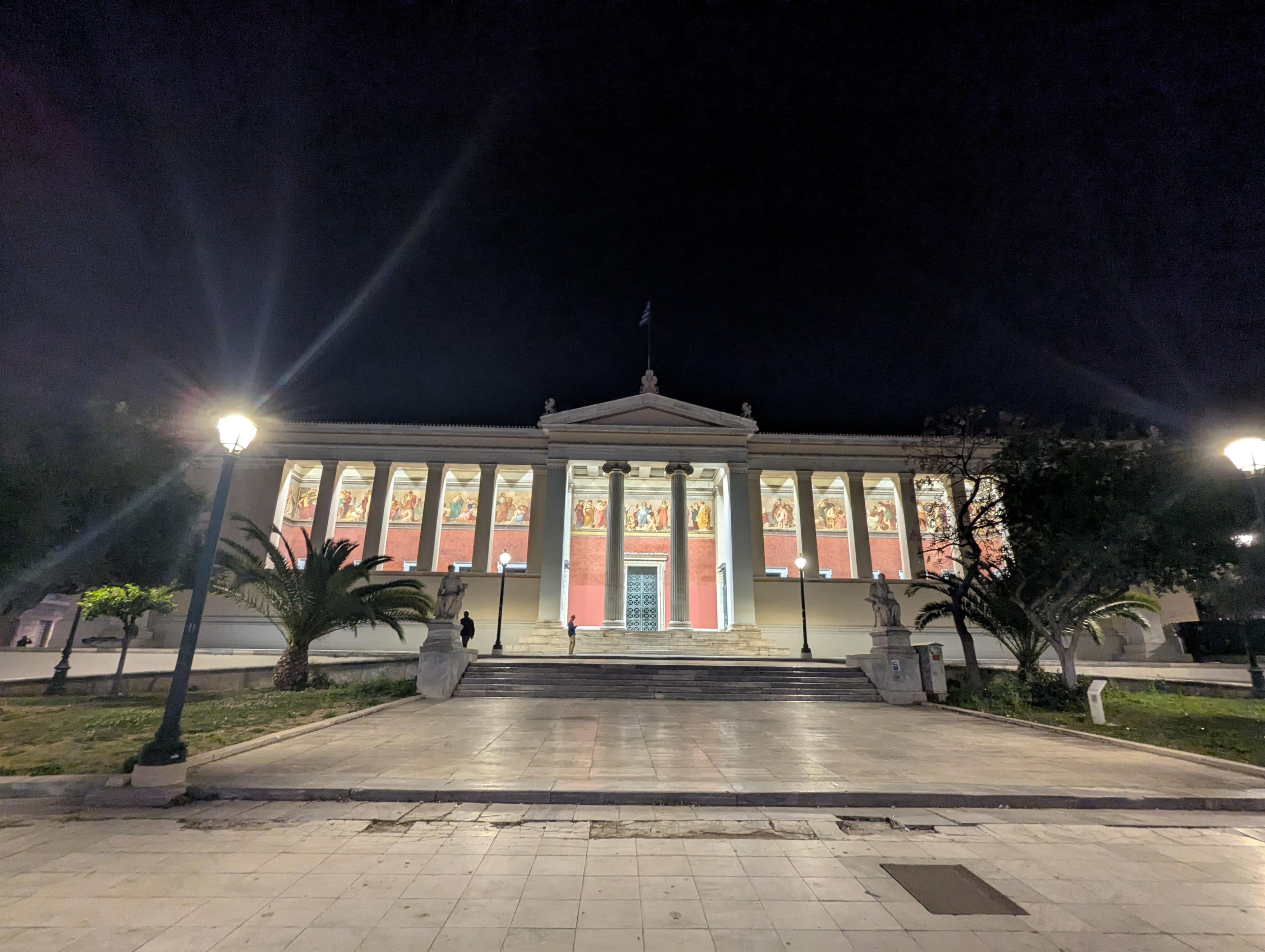
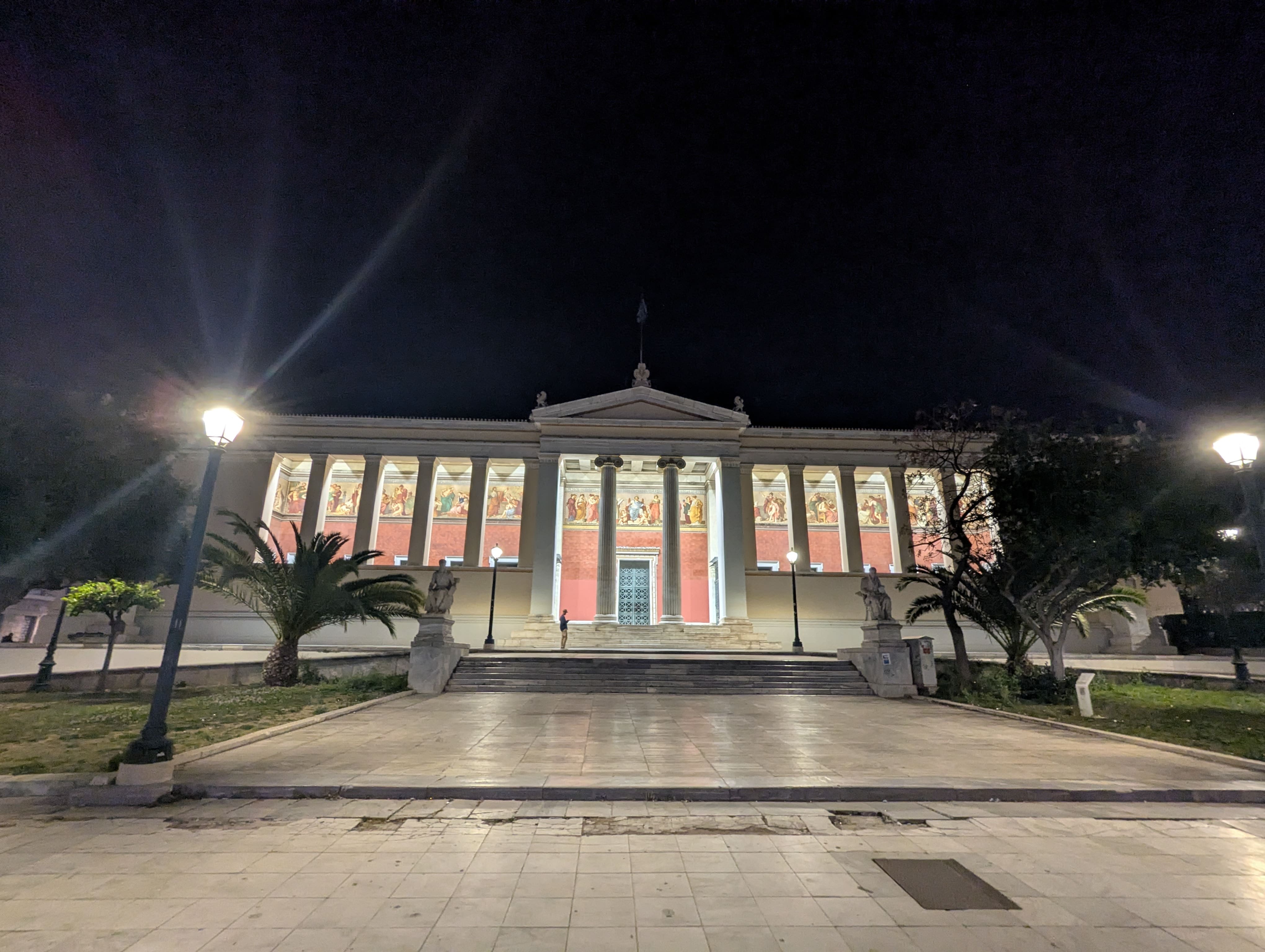
Back to Athens for the night. The Academy of Athens is lit up after dark and is a genuinely striking thing to walk past on the way to dinner.
Day 4: Nafplio, Corinth and Epidaurus
The other Athens day trip, this one southwest into the Peloponnese.
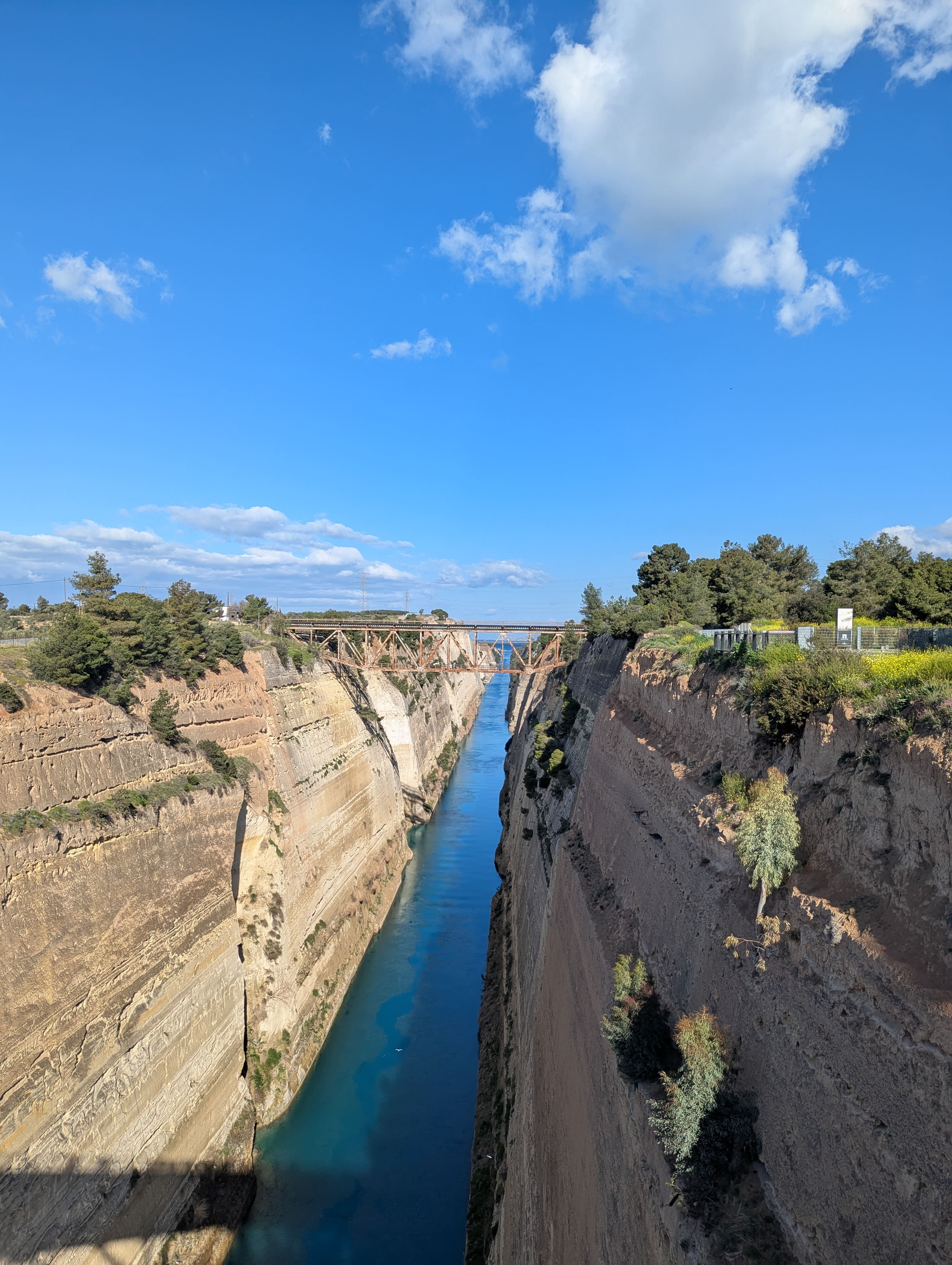
You cross the Isthmus of Corinth on the way, so stop there first — it's a narrow man-made canal slicing straight through the rock, and the view down from the bridge is better than it has any right to be for a roadside stop.
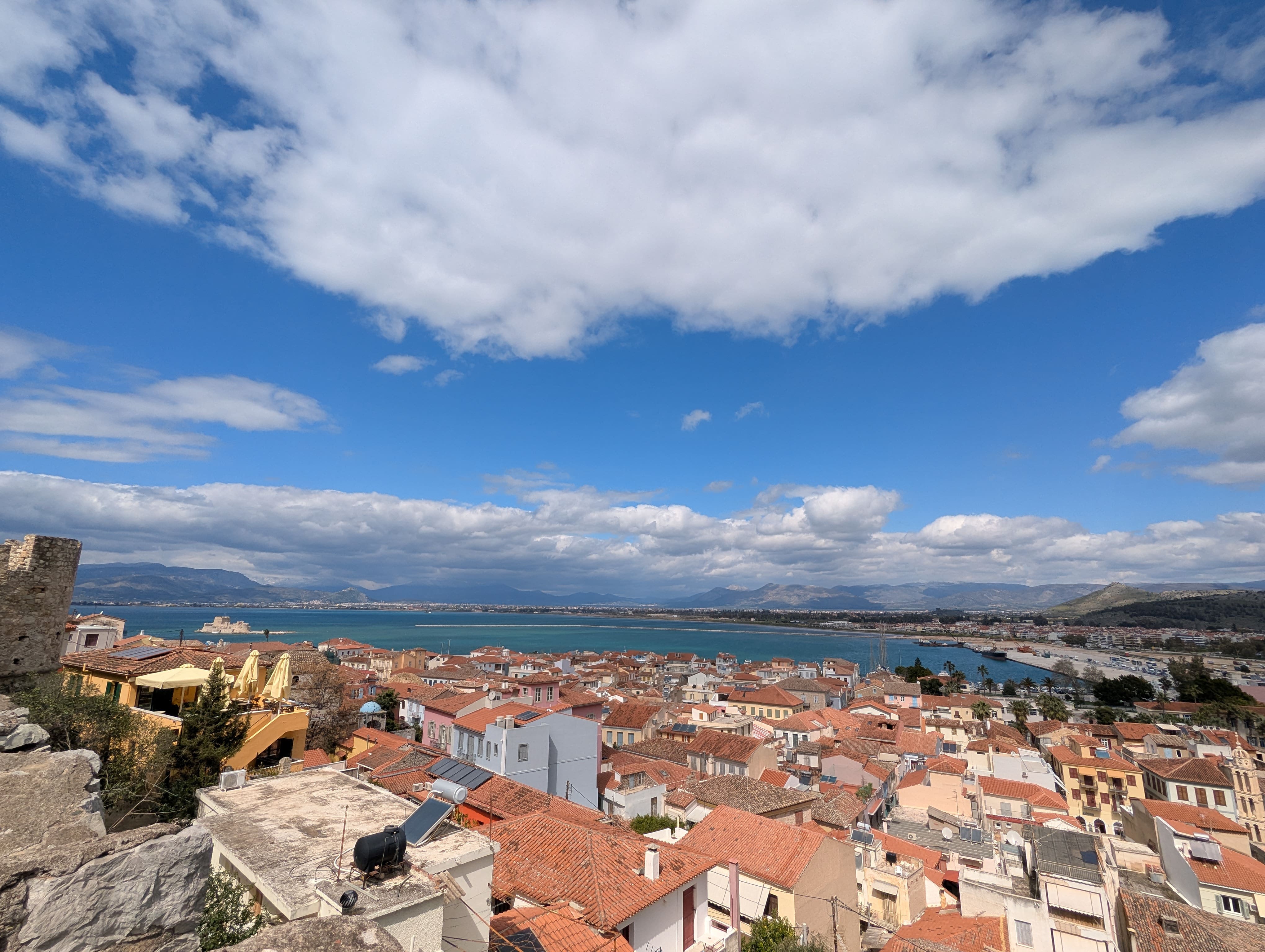
Nafplio is the reason to come this way: a seaside town of neoclassical buildings and narrow alleys, with a fortress above it and the water below. It's built for a slow lunch and a wander, and after two days of ruins that's exactly what you want.
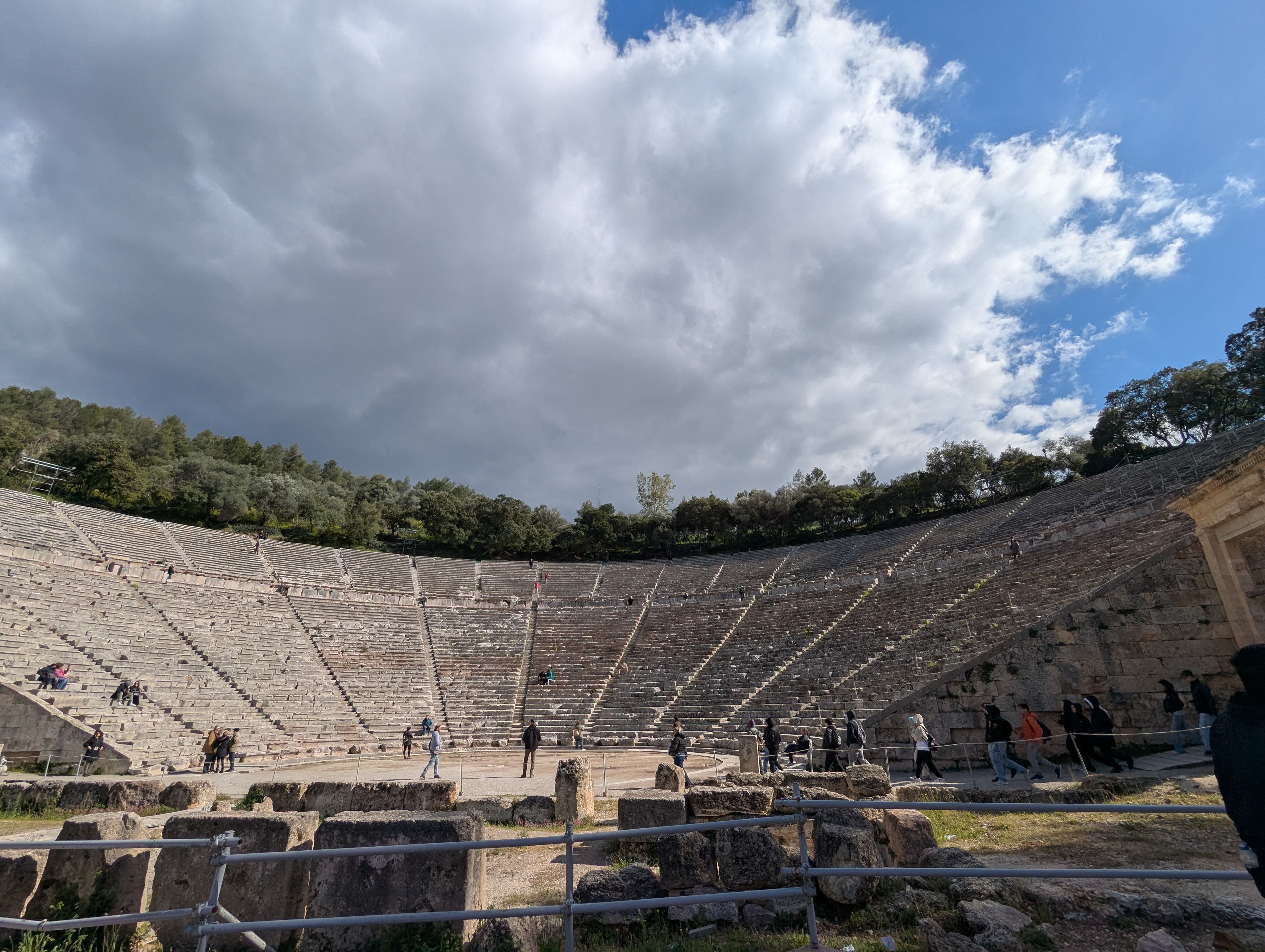
Epidaurus on the way back, for the ancient theatre. The acoustics are the famous part and they aren't exaggerated — someone speaking at normal volume in the centre carries all the way to the back row.
Day 5: The rest of Athens, then north to Meteora
A last morning in the city. The Panathenaic Stadium is built entirely of marble and hosted the first modern Olympics in 1896, and the Acropolis Museum is the one museum I'd insist on — most of the original sculpture from the Acropolis is down here, and the site makes far more sense after you've seen it.
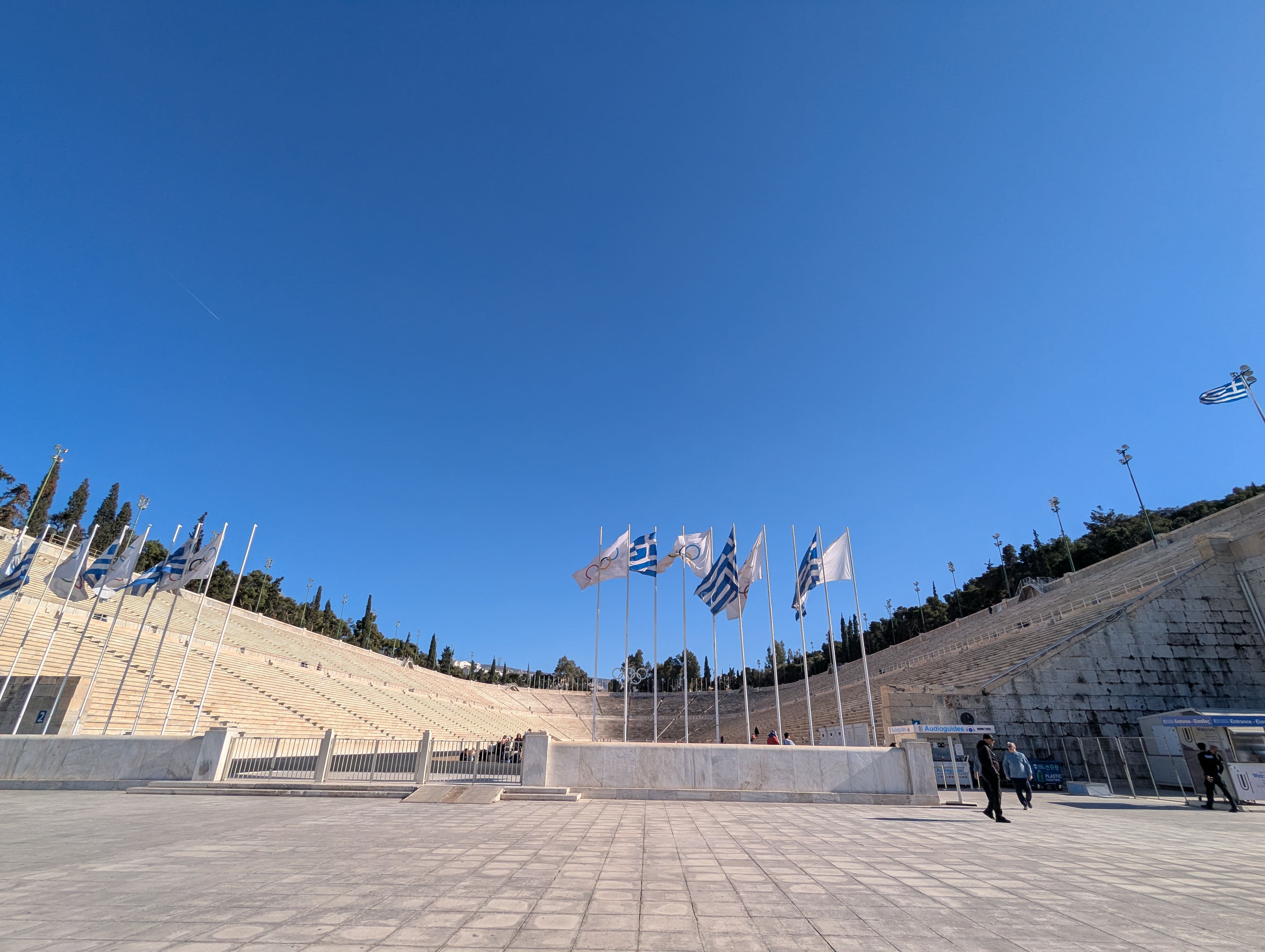
Then north to Meteora in the afternoon. The train and bus both go; you're aiming for the town below the rocks.
Day 6: Meteora — the best day of the trip
Enormous rock pillars coming straight up out of the plain, with monasteries built on top of them. Six are still active. It doesn't really photograph — the scale is the thing.
Walk up from the town. There's a road that loops between the monasteries and plenty of people drive or take a tour bus around it, but there are footpaths from the town below all the way up, and we walked to all of them. That's the whole experience: you come up through the trees and the rocks appear above you one at a time.
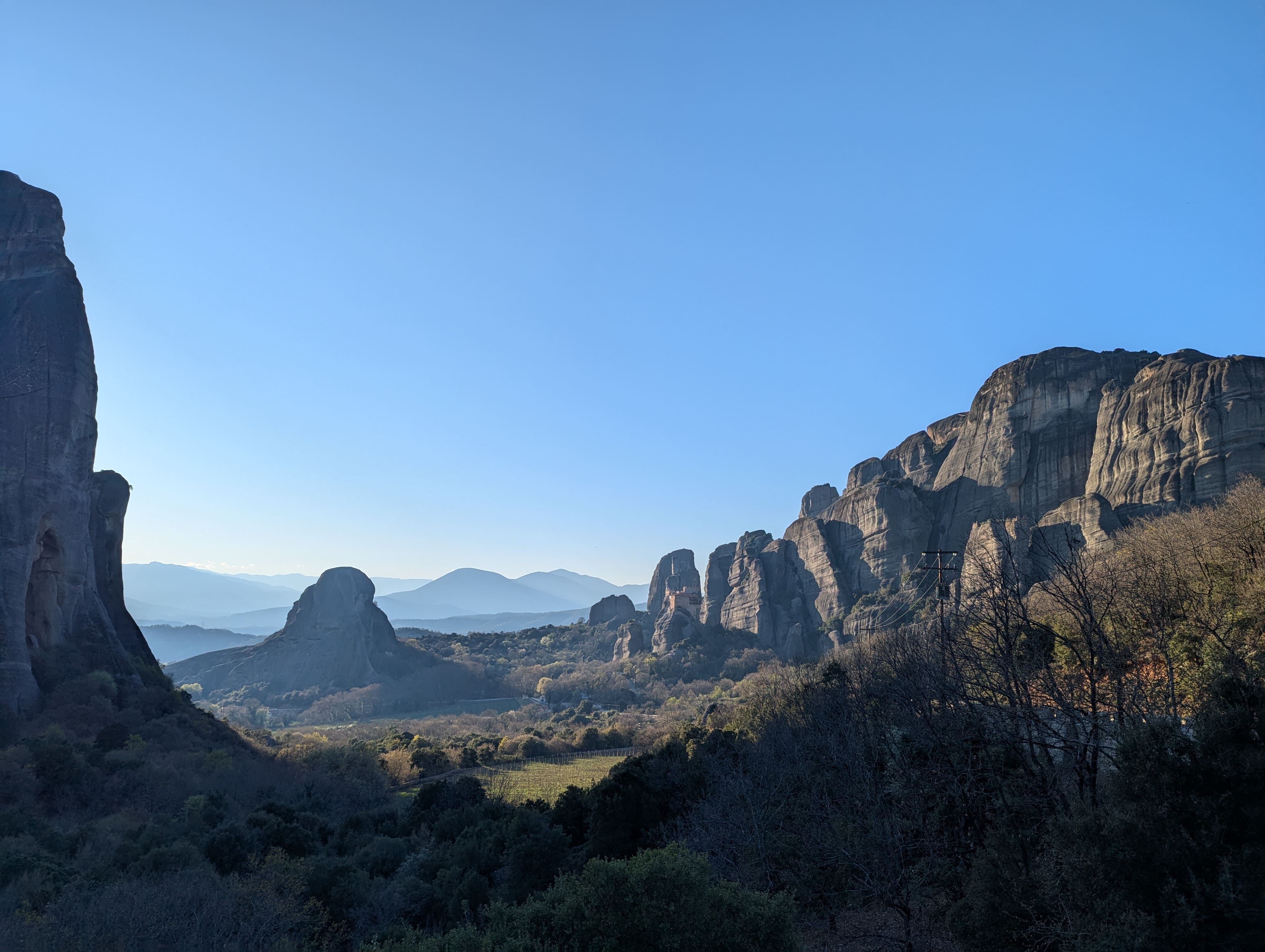
Three practical things nobody told me:
- You cannot go inside all six, no matter how organised you are. Each monastery closes on a different day of the week, so you'd need at least two days there to get into every one. We went inside one, and honestly that's enough — they're similar, and the reason you're here is the rocks and the setting, not the interiors.
- There's a dress code for going inside. Nothing dramatic — just don't turn up in shorts and flip-flops.
- Stay for sunset. This is the one bit of timing advice I'd push. I never did a sunrise there so I can't compare, but the sunset was extraordinary, and the day-trip crowds are long gone by then. Being based in the town for two nights instead of coming in for the day is what makes that possible.
Day 7: Back to Thessaloniki
The return leg, and then whatever's left of the evening. The Roman Forum is an excavated ancient square in the middle of the city, and Ano Poli, the upper town, is the nicest part of Thessaloniki — Byzantine churches, old Ottoman houses, and a view back down over the city and the sea.
Day 8: Fly home
What I'd tell you
- You don't need a car. We did all of this on buses and trains, including both Athens day trips and the run up to Meteora.
- Go in shoulder season. End of March was cool, clear and uncrowded, and everything was open.
- Give Meteora two nights, not a day trip. It's the best thing on this itinerary and the sunset is the reason.
- Skip Thessaloniki if your flights let you. Those two nights would be better spent almost anywhere else on this list.
- Delphi earns its travel time — but on the history, not the scenery.
Mainland Greece gets treated as the bit you pass through on the way to a ferry. It isn't. Meteora alone justifies the trip.